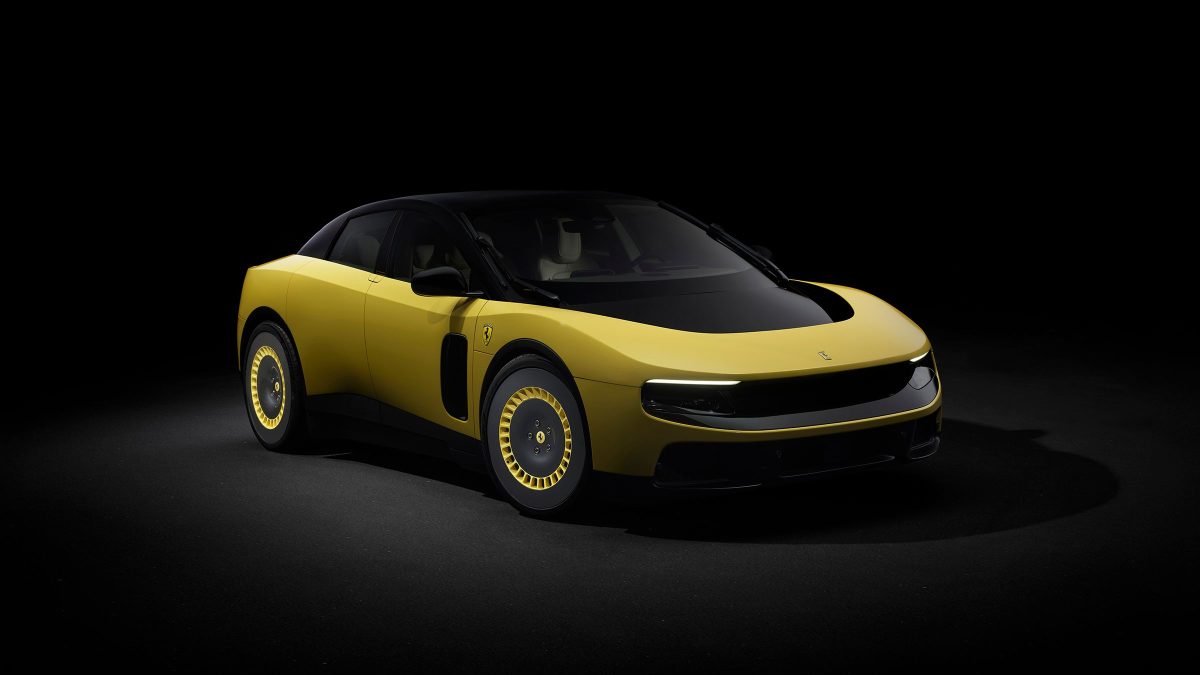

Ferrari recently unveiled the Luce, its first all-electric vehicle, and the automotive world took notice. Designed by Jony Ive and a team of former Apple engineers, the Luce represents a significant departure from Ferrari’s traditional internal combustion heritage. The collaboration raises an intriguing question: what might have happened if Apple had seen its ambitious $10 billion electric vehicle project through to completion?
Background
The Luce is not merely a technological showcase but a design statement. Jony Ive, the renowned former chief design officer at Apple, brought his signature minimalist aesthetic to Ferrari’s first EV. The result is a vehicle that blends Ferrari’s performance DNA with Apple’s focus on clean lines and user interface simplicity. Industry analysts note that the Luce could have been the automotive equivalent of the iPhone had Apple decided to enter the car market directly.
Apple’s secretive Project Titan, which reportedly cost the company $10 billion over nearly a decade, was canceled in 2024. The project aimed to create a fully autonomous electric vehicle, but internal challenges and shifting priorities led to its abandonment. Many former Apple engineers who worked on Titan subsequently joined Ive’s design firm, LoveFrom, which partnered with Ferrari on the Luce.
Reactions and Implications
Automotive critics have praised the Luce’s design but also expressed a sense of loss. The vehicle demonstrates the kind of innovation that Apple could have brought to the car industry, had the company persisted with Project Titan. The Luce features a seamless glass roof, a touchscreen-free cabin with haptic controls, and advanced battery management systems that optimize range and performance.
However, the Luce remains a Ferrari product, with a price point and exclusivity that limit its market impact. Ferrari plans to produce only a few thousand units annually, making it a niche offering rather than a mass-market vehicle. This contrasts with Apple’s typical strategy of designing for billions of users.
Design Philosophy and Market Context
The Luce’s interior eliminates traditional displays, relying instead on haptic feedback surfaces and augmented reality projections onto the windshield. This approach mirrors Apple’s design philosophy of removing complexity while maintaining functionality. Yet, for many consumers, the Luce serves as a reminder of what could have been if Apple had entered the EV space directly, potentially accelerating adoption and driving down costs through economies of scale.
Ferrari’s decision to involve Ive and his team underscores a broader trend: traditional automakers seeking design expertise from consumer electronics leaders. Similar collaborations have occurred with other luxury brands, though none have carried the same weight as the Apple-Ferrari connection.
Looking Ahead
The Luce is expected to enter production in 2026, with initial deliveries to customers by early 2027. Ferrari has not disclosed pricing, but experts estimate the vehicle will cost well over $400,000. The company plans to invest more than $5 billion in EV infrastructure and production facilities over the next five years.
As the automotive industry transitions to electrification, the Luce stands as a testament to the potential of cross-industry collaboration. For now, it remains a beautiful what-if, a design triumph born from a missed opportunity.