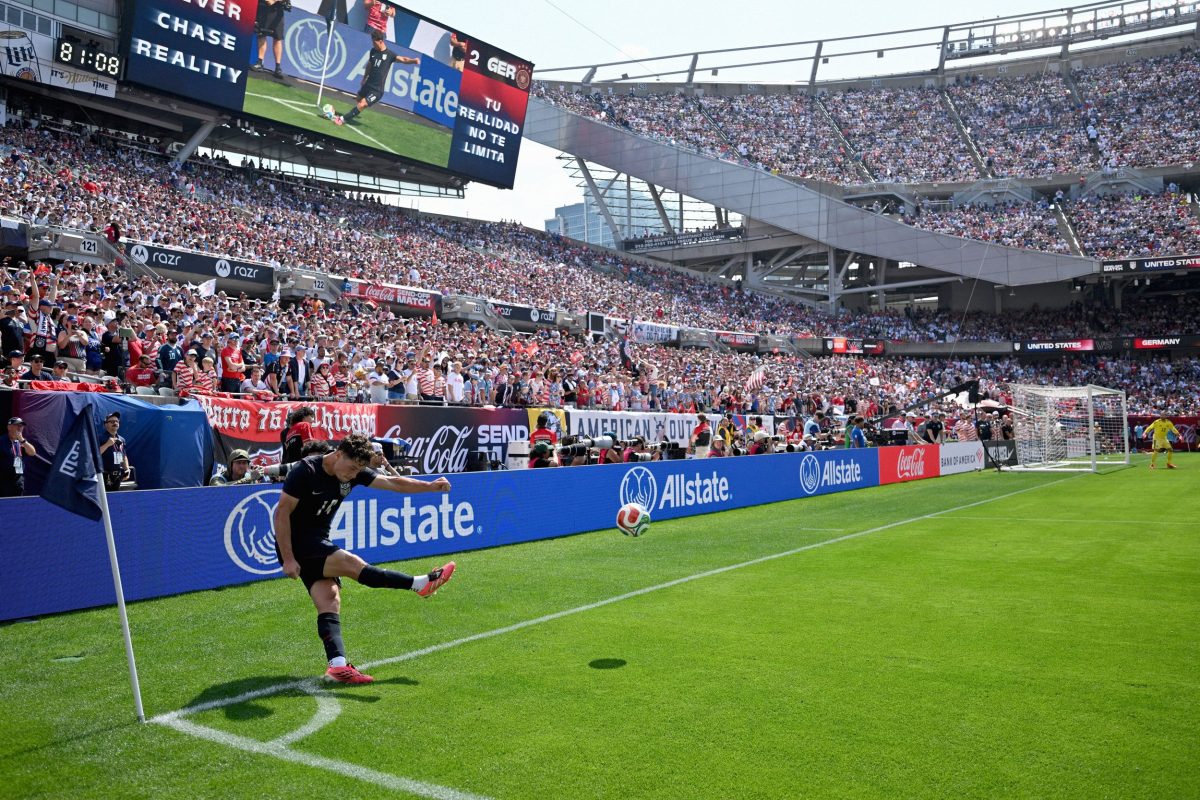

As the World Cup draws global attention to the beautiful game, a recurring question emerges among fans and analysts alike: how do soccer players make the ball bend in midair? The answer lies in physics, specifically the Magnus effect, which governs the trajectory of spinning objects in flight.
Understanding the Magnus Effect
When a soccer player strikes the ball with spin, the rotation creates a difference in air pressure on opposite sides. One side of the ball moves faster relative to the surrounding air, while the other side moves slower. This pressure differential generates a force that pushes the ball sideways, causing it to curve.
The direction and degree of curvature depend on the spin axis. A ball kicked with sidespin curves horizontally. A ball with topspin dips more sharply. Backspin can cause the ball to rise or float.
Key Factors in Bending a Shot
Several variables influence how effectively a player can bend a shot. The speed of the kick determines the airflow around the ball. Higher speeds increase the pressure differential and thus the curve. The amount of spin is equally critical: more spin produces a more pronounced bend.
Surface texture also matters. The seams and panels of a soccer ball affect its aerodynamic properties. Modern match balls are designed with dimpled or textured surfaces to enhance grip and improve predictability during curved shots.
Practical Implications for Players
Players such as Lionel Messi and Cristiano Ronaldo have mastered these principles through years of practice. The typical technique involves striking the ball off center with the instep or outside of the foot. The angle of approach and the point of contact determine the spin axis and the resulting curve.
Environmental conditions, including wind and altitude, can alter the ball’s trajectory. At higher altitudes, thinner air reduces drag, allowing the ball to hold its spin longer and curve more. This is why matches in locations like Mexico City or La Paz often feature more dramatic bending shots.
Historical Context and Evolution
The physics of bending shots has been understood for centuries, but the application in soccer evolved significantly during the 20th century. Brazilian star Pelé popularized the technique in the 1950s and 1960s. Defenders and goalkeepers have since adapted their strategies to anticipate and counter these shots.
Modern training includes specialized drills to develop muscle memory for precise spin. Coaches use video analysis to break down foot placement and body positioning. Wearable sensors now provide real-time feedback on spin rates and impact points.
The Role of Technology and Analysis
Broadcasters during the World Cup often use graphics to illustrate the ball’s trajectory and spin. These visualizations are based on tracking data from high-speed cameras. Such analysis helps audiences understand why a free kick bends around a defensive wall and into the net.
Researchers continue to study soccer ball aerodynamics. Wind tunnel tests confirm that surface irregularities can reduce drag and increase stability during flight. Manufacturers regularly update ball designs to balance performance with fairness.
Looking ahead, the integration of artificial intelligence and machine learning could help players optimize their kicking technique. Data-driven coaching tools may become standard in professional academies. The physics of bending shots will remain a key area of study as the game evolves, with future innovations likely focusing on how to improve accuracy and consistency under varying match conditions.