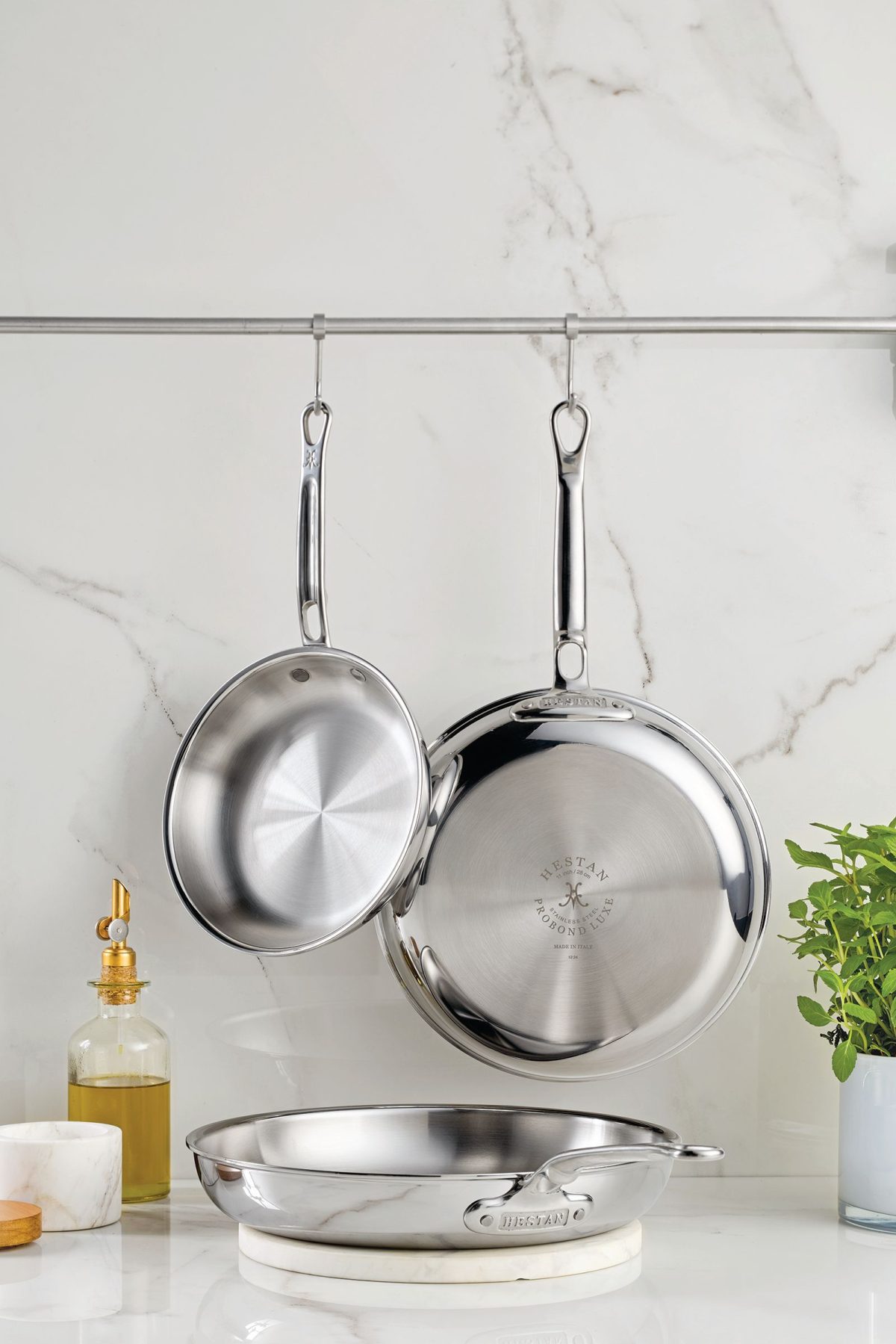

Cookware choices can shape kitchen routines and long-term cooking outcomes. Among the many options available, stainless steel skillets have maintained steady interest from both amateur cooks and professional chefs.
Unlike nonstick pans, stainless steel variants do not rely on chemical coatings. Instead, they offer direct heat transfer and high durability. These characteristics make them suitable for searing, browning, and deglazing.
Stainless steel pans require a small adjustment in technique. Without a nonstick surface, food may stick if heat is not properly managed. However, once the pan is preheated and oil is added properly, a natural release occurs.
Durability and Longevity
One primary advantage of stainless steel is its lifespan. High quality construction can withstand decades of use without warping or degrading. The material resists rust, corrosion, and impact damage.
Unlike coated pans that need replacement every few years, a stainless steel skillet remains functional indefinitely. This reduces long term waste and expense.
Cooking Performance
Stainless steel provides even heat distribution when combined with a conductive core such as aluminum or copper. This allows for consistent results across the cooking surface.
Maillard reactions, which create browning and complex flavors, develop readily on stainless steel. The pan also handles acidic ingredients well, such as tomatoes or vinegar based sauces, without reacting or leaching metals.
Deglazing after searing lifts fond from the pan surface, forming a base for pan sauces. This process is difficult with nonstick coatings.
Care and Maintenance
Cleaning stainless steel requires no special tools. Most stuck food can be removed by boiling water in the pan or using a gentle abrasive cleaner.
The material is dishwasher safe, though hand washing with mild soap preserves the finish. Over time, some discoloration may occur from high heat, but this does not affect performance.
Considerations for Buyers
Stainless steel skillets may be heavier than nonstick alternatives. The absence of a coating means more attention is needed during cooking to prevent sticking.
Price ranges vary widely. Entry level options perform adequately, while higher end models with multiple layers offer superior heat retention and evenness.
When selecting a skillet, buyers should consider handle design, weight, and compatibility with their cooktop type. Induction ready stainless steel models are widely available.
In the coming years, consumer interest in durable non reactive cookware is expected to grow. Stainless steel remains a mainstream choice for those prioritizing longevity and performance over convenience.