
A sophisticated cyber espionage campaign, attributed to threat actors with strong links to North Korea, has been uncovered targeting organizations in South Korea. The operation leverages a legitimate public platform, GitHub, as a core component of its malicious infrastructure. This tactic marks a significant evolution in the methods used by state-sponsored groups to obscure their activities and maintain persistence within victim networks.
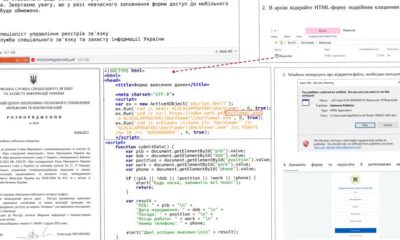
According to a detailed analysis by Fortinet’s FortiGuard Labs threat research team, the attack chain begins with a common but deceptive vector: obfuscated Windows shortcut files. These files, which carry the .LNK extension, are often disguised as benign documents to trick users into executing them. In this campaign, they serve as the initial point of compromise, designed to download and execute further malicious payloads.
Anatomy of a Multi-Stage Attack
The use of LNK files as a starting point is a deliberate choice by the attackers. These files can be crafted to run hidden commands when opened, making them an effective tool for bypassing initial security scans. The primary function of the LNK file in this scheme is to fetch and launch a decoy PDF document. This document serves a dual purpose: it provides a legitimate-looking facade to the user while simultaneously deploying malicious code in the background.
The true ingenuity of the attack lies in its command-and-control (C2) mechanism. Instead of relying on dedicated, easily blacklisted servers, the attackers have weaponized GitHub repositories. These public code-hosting platforms are used to host secondary scripts and payloads. The malware communicates with these repositories to receive instructions and exfiltrate stolen data, effectively using GitHub as a covert communication channel.
The Significance of Living-off-the-Land and Legitimate Services
This strategy falls under the broader category of “living-off-the-land” techniques, where attackers abuse trusted tools and services already present in a target environment. By using GitHub, a platform integral to software development globally, the attackers camouflage their traffic within normal, allowed web activity. This makes detection by network security tools significantly more challenging, as connections to GitHub are rarely blocked in corporate or research environments.
The attribution to North Korean, or DPRK-linked, hackers is based on technical indicators and historical patterns. Such groups, often referred to as Advanced Persistent Threats (APTs), are known for conducting long-term cyber espionage campaigns to gather intelligence and steal financial assets. Their targets frequently include government agencies, think tanks, defense contractors, and financial institutions in South Korea and allied nations.
Implications for Cybersecurity and Digital Hygiene
The campaign underscores a persistent trend in cyber warfare: the exploitation of trust in widely used digital platforms. It highlights that security is not solely about blocking known bad domains but also about monitoring for anomalous use of legitimate ones. Organizations must now scrutinize outbound traffic to common services like GitHub, Dropbox, or Google Drive for signs of data exfiltration or command signaling.
For system administrators and security teams, the incident reinforces fundamental best practices. User education on the dangers of opening unsolicited email attachments, even those appearing as simple shortcuts or documents, remains critical. Furthermore, implementing application allow-listing, where only pre-approved software can run, can prevent the execution of malicious LNK file payloads. Robust endpoint detection and response (EDR) solutions are also vital for identifying the subtle, multi-stage behaviors exhibited in such attacks.
Looking Ahead: The Evolving Threat Landscape
The cybersecurity community anticipates that this method of using mainstream developer and cloud platforms for C2 operations will continue and likely expand. Other threat actors are expected to adopt similar tradecraft, necessitating more advanced behavioral analytics from security vendors. Researchers and intelligence agencies will continue to dissect the malware samples, seeking unique code signatures or operational patterns that could lead to more definitive attribution and the development of specific countermeasures.
Official responses may involve coordinated actions from international cybersecurity authorities, potentially leading to the takedown of the specific malicious repositories used in this campaign. However, the adaptable nature of these hacking groups means they will quickly migrate to other repositories or services. The enduring defense will rely on increased vigilance, layered security postures, and continuous sharing of threat intelligence between the private sector and government agencies to disrupt these sophisticated, state-aligned cyber operations.