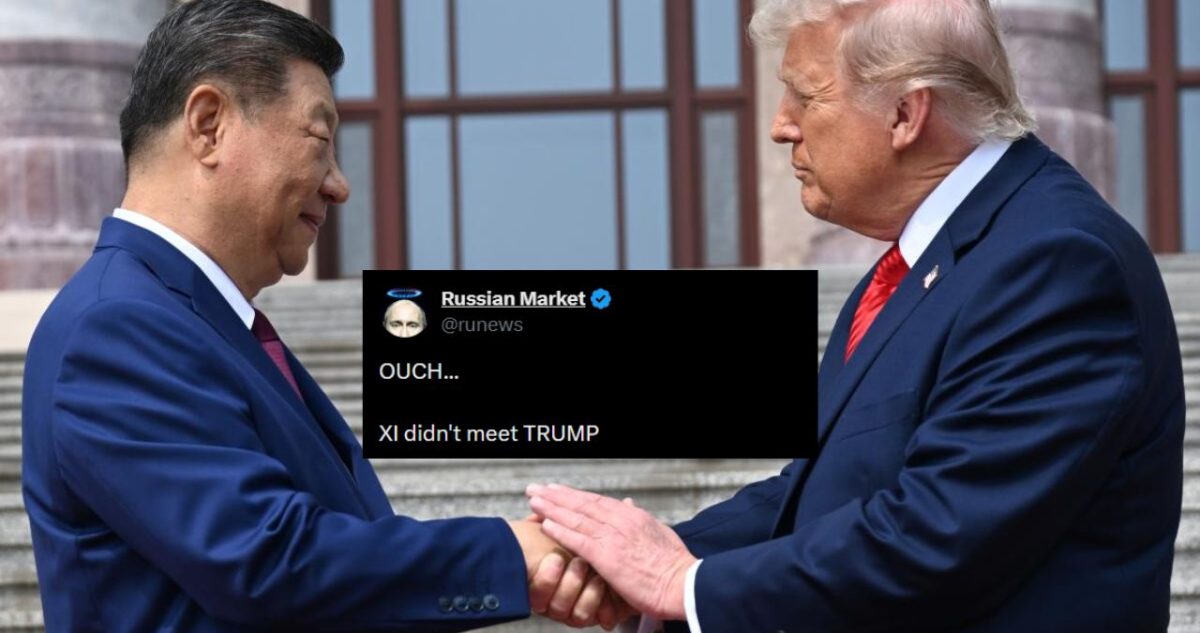

When U.S. President Donald Trump arrived in Beijing for a high-profile state visit, the absence of Chinese President Xi Jinping at the official welcome ceremony immediately drew attention. The meeting between the two leaders, which was scheduled to take place at the Great Hall of the People, did not include Xi greeting Trump on the tarmac as is customary for visiting heads of state. Instead, Vice Premier Wang Yang received Trump upon his arrival, a protocol decision that fueled speculation about a potential diplomatic snub.
The timing of the absence added to the intrigue. Just hours before Trump’s plane landed, Chinese state media released a statement that Xi was attending a high-level party meeting outside the capital. While such scheduling conflicts are not unprecedented in diplomatic protocol, the optics of Xi skipping the arrival ceremony for a leader with whom he has maintained a complex and often tense trade relationship raised questions among political analysts and international observers.
Background and Protocol Context
Official welcomes for foreign leaders in China follow a strict set of diplomatic norms. Typically, the Chinese president or prime minister meets the visiting dignitary upon arrival at the airport or the official meeting venue. Trump’s visit was the first state visit by a U.S. president since Barack Obama’s in 2014, and expectations for a warm reception were high. Xi’s decision to delegate the initial welcoming duties to a vice premier, rather than attending personally, was quickly interpreted in some media outlets as a deliberate signal of distance.
However, Chinese foreign ministry officials later explained that Xi’s schedule had been fixed weeks in advance to coincide with internal party meetings regarding economic policy. They insisted that the absence was logistical and not political. Senior diplomats pointed out that Xi and Trump were still scheduled to meet later in the visit for formal talks and a state dinner, suggesting that the arrival ceremony was a minor procedural detail rather than a reflection of bilateral relations.
Reactions and Implications
International reaction was divided. Some Western analysts viewed the absence as a calculated move by Xi to demonstrate that China would not be overly accommodating to Trump’s aggressive trade stance. Others dismissed the incident as a routine protocol variation, noting that similar arrangements had occurred during prior visits by other world leaders. The absence dominated cable news coverage and social media discussion in both countries, with commentators debating the symbolic weight of the gesture.
Within China, state-controlled media largely downplayed the event, focusing instead on the substantive discussions scheduled between the two presidents. Chinese netizens, however, expressed mixed opinions online, with some praising Xi for maintaining a firm posture toward Trump’s trade demands, while others questioned whether the absence could hinder diplomatic progress on tariffs and intellectual property disputes.
Long Term Diplomatic Significance
The incident highlights the inherent tension in U.S. China relations, where every symbolic gesture is scrutinized for deeper meaning. Xi and Trump had previously exchanged warm letters and phone calls, but the arrival snub narrative underscored the fragile nature of their personal rapport. Trade negotiations were already at a delicate stage, with both sides imposing tariffs on billions of dollars worth of goods. The optics of Xi’s absence could influence public perception of the relationship’s trajectory.
Looking ahead, the two leaders were expected to hold a joint press conference and sign limited trade agreements to ease immediate tensions. However, structural disputes over technology transfer, market access, and cybersecurity remained unresolved. The absence event itself may fade from memory if subsequent meetings produce concrete results, but it serves as a reminder that diplomacy is as much about perception as it is about policy.
As the visit proceeds, official timelines indicate that Xi and Trump will have multiple face to face sessions, including a private working dinner. The coming days will determine whether the initial coolness is merely a procedural footnote or a harbinger of a more distant phase in U.S. China relations. For now, global markets and diplomatic circles will watch closely for signals from both capitals regarding the next steps in their ongoing economic engagement.