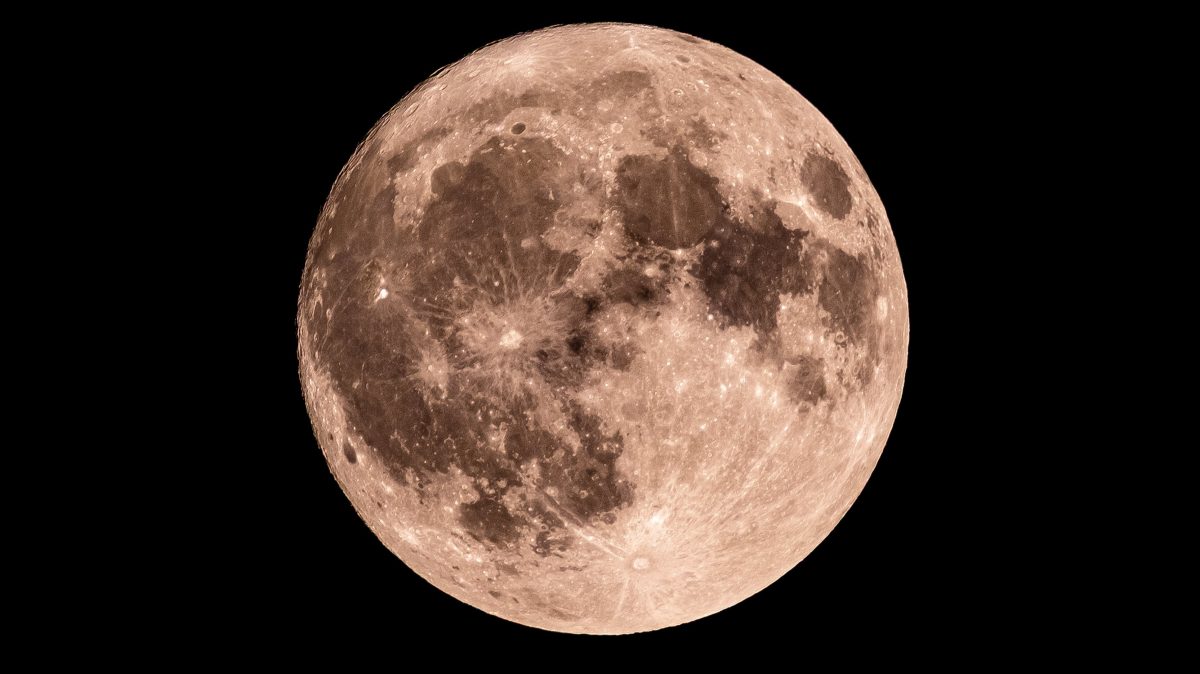

Observers looking at the night sky on Friday, May 15, will see only a sliver of the Moon. The lunar surface is increasingly obscured as the celestial body approaches the New Moon phase.
As of May 15, the Moon is in the Waning Crescent phase. This means it appears as a thin, shrinking crescent in the pre-dawn sky. Only approximately 4 percent of the Moon’s visible surface will be illuminated tonight, according to astronomical data.
The Waning Crescent phase occurs just before the New Moon, when the Moon is positioned between Earth and the Sun. During this time, the side of the Moon facing Earth receives minimal direct sunlight, making it difficult to see without optical aid.
For casual skywatchers, the faint crescent may be visible near the eastern horizon just before sunrise. However, the low illumination level means that most people will not notice the Moon without intent or clear, dark skies.
The next major lunar milestone is the New Moon, which will occur shortly after this phase. At New Moon, the Moon is completely invisible from Earth because its illuminated side faces away from our planet. This marks the beginning of a new lunar cycle.
Following the New Moon, the Moon will enter the Waxing Crescent phase, becoming slightly more visible each evening. This gradual brightening will continue until the First Quarter Moon, approximately one week later.
The Waning Crescent phase is the final stage of the current lunar cycle. It typically lasts for a few days before transitioning into the New Moon. This pattern repeats every 29.5 days as the Moon orbits Earth.
Astronomers note that the Waning Crescent Moon often appears as a thin arc of light, sometimes accompanied by Earthshine. Earthshine occurs when sunlight reflects off Earth and faintly illuminates the unlit portion of the Moon, giving it a ghostly glow.
For accurate phase timings, observers should consult almanacs or astronomical calculators based on their local time zone. The exact moment of the New Moon may vary by a few hours depending on geographic location.
Looking ahead, the next New Moon will reset the lunar calendar, offering a fresh opportunity for nighttime observation. The Waxing Crescent phase that follows will be more prominent and easier to spot in the western sky after sunset.