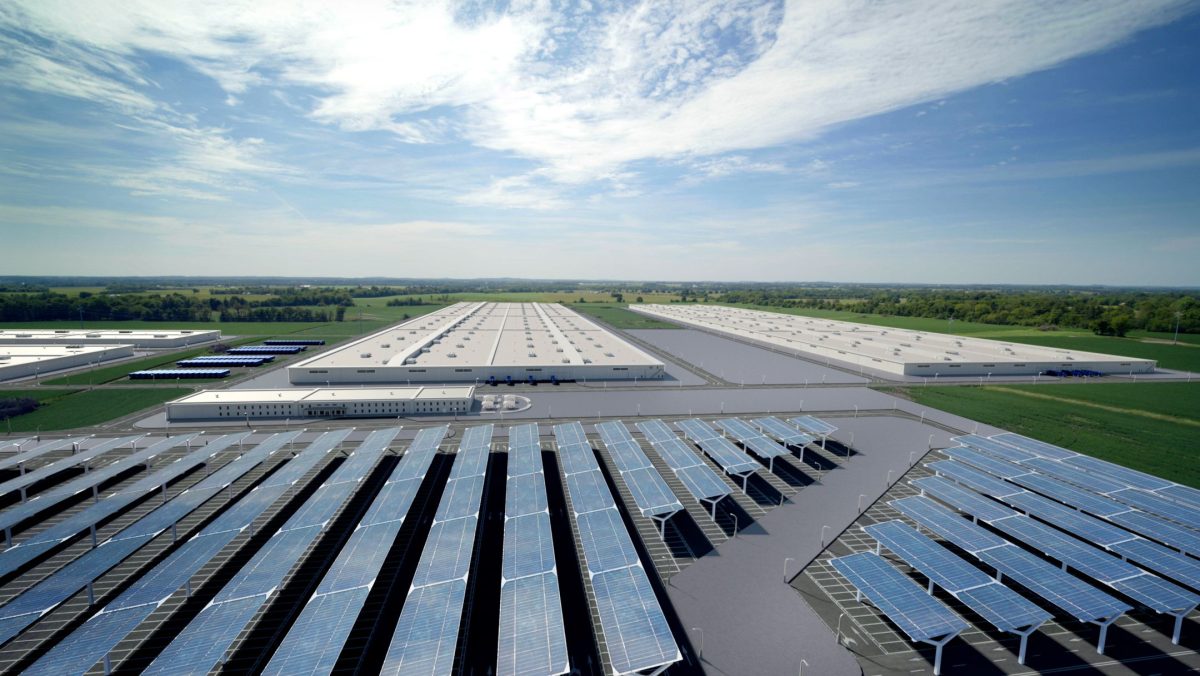

Ford and General Motors are reducing their emphasis on electric vehicle production and increasing investments in battery storage technology. This strategic pivot is closely tied to the rising demands of artificial intelligence infrastructure.
The decision reflects a broader reassessment across the American automotive sector, where high EV production costs and slower than expected consumer adoption have prompted manufacturers to seek alternative revenue streams. Battery storage, particularly for large scale energy systems, has emerged as a more immediately profitable avenue.
AI data centers and cloud computing facilities require immense and stable power supplies, often supported by massive battery banks. Automakers recognize that the same lithium ion battery technology used in EVs can be repurposed for grid storage and industrial applications. This creates a natural expansion opportunity for companies that have already invested heavily in battery production.
Ford has announced plans to redirect a portion of its capital expenditure from dedicated EV platforms to stationary energy storage systems. GM is similarly restructuring its hardware divisions to focus on larger format battery units designed for commercial and utility use.
The shift does not represent a complete abandonment of electric cars. Both companies continue to develop EV models, but at a reduced pace. The new priority is to manufacture battery storage solutions that serve markets beyond personal transportation.
Economic Pressures Behind the Pivot
Several economic factors have driven this change. Raw material costs for lithium, cobalt, and nickel remain volatile. EV price wars, particularly with Chinese manufacturers, have compressed profit margins. Meanwhile, government incentives for renewable energy storage have created a favorable regulatory environment for utility scale batteries.
Automakers also face pressure from shareholders to demonstrate near term profitability. Battery storage contracts with energy companies and technology firms often provide stable, long term revenue that EV sales currently lack.
Artificial intelligence is a significant factor. The computing power required to train and run large AI models demands continuous electricity, and companies like Google, Microsoft, and Amazon are investing heavily in backup and peak shaving battery systems. Automakers can supply this hardware directly or through energy partnerships.
Reactions from Industry Observers
Industry analysts have noted that the pivot is a pragmatic response to market realities. One analyst described it as a “rebalancing of risk,” where automakers leverage existing battery expertise to capture growth in a less competitive segment.
Environmental groups have expressed concern that the shift could slow the transition to electric passenger vehicles. However, automakers argue that large scale battery storage indirectly supports EV adoption by stabilizing renewable grids.
Implications for the Automotive and Energy Sectors
The move signals that legacy automakers are adapting their identities from vehicle manufacturers to diversified energy technology companies. This could reshape supply chains, with more battery production capacity allocated to stationary storage rather than car batteries.
For the energy sector, the entry of automotive giants brings manufacturing scale and cost reduction potential. It may accelerate the deployment of grid storage systems, helping utilities manage renewable intermittency.
Consumers may see fewer new EV models from Ford and GM in the near term, but the companies are expected to maintain a baseline electric lineup. They are also exploring vehicle to grid technologies, where parked EVs could discharge electricity back to the grid, creating a hybrid model of car and energy storage.
Looking ahead, both Ford and GM are expected to announce specific storage product lines and partnership agreements within the next two quarters. Their success in this new direction will depend on execution, supply chain efficiency, and the continued growth of AI related energy demand. If the pivot proves profitable, other automakers may follow, further blurring the line between the automotive and energy industries.