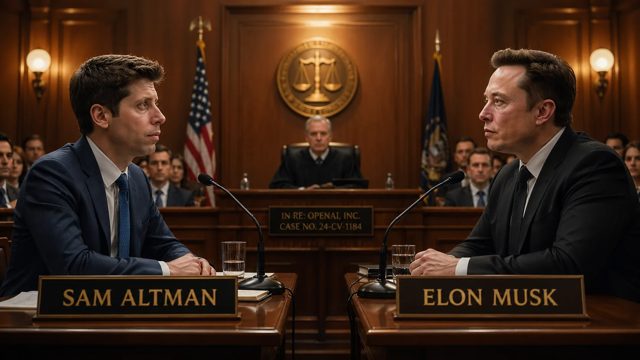

A federal jury has delivered a verdict in the high profile legal dispute between OpenAI CEO Sam Altman and billionaire entrepreneur Elon Musk. The case, which drew widespread attention across the technology sector, concluded with a ruling in favor of Altman and OpenAI.
The jury found that Musk’s claims against Altman and the artificial intelligence company lacked sufficient legal basis. Specific details of the jury’s reasoning remain sealed for now, though court documents indicate that the panel determined no breach of contract or fiduciary duty had occurred.
Background of the Dispute
The legal conflict originated from Musk’s allegations that Altman and OpenAI had violated the organization’s original nonprofit mission. Musk, a co founder of OpenAI in 2015, had left the company’s board in 2018 and later launched his own AI venture, xAI.
In his complaint, Musk argued that OpenAI’s shift toward a for profit structure and its partnership with Microsoft contradicted the founding agreement. The jury rejected these arguments after reviewing evidence presented during a three week trial.
Implications for the AI Industry
Legal analysts say the verdict could set a precedent for corporate governance disputes involving nonprofit to for profit transitions. The case also highlights ongoing tensions between founding members and current leadership in rapidly evolving technology sectors.
OpenAI’s valuation has climbed to over $80 billion, making it one of the most valuable private companies globally. The ruling removes a significant legal cloud that had hung over the organization since the lawsuit was filed in early 2024.
Reaction from Elon Musk
Musk immediately announced plans to appeal the verdict, stating that the decision was “not supported by the evidence.” His legal team filed a notice of appeal with the Ninth Circuit Court of Appeals within hours of the ruling.
“This fight is not over,” Musk wrote on his social media platform X. “The public deserves transparency about how OpenAI operates.”
What the Jury Said
According to the jury foreperson, the panel found that Musk had not provided sufficient proof that Altman or OpenAI had deliberately misled him. The jurors emphasized that the founding documents did not explicitly prohibit the structural changes OpenAI later adopted.
The jury also determined that Musk’s departure from the board in 2018 effectively severed any binding obligations OpenAI may have had toward him. No damages were awarded to either party.
Legal experts note that the verdict does not address broader questions about AI safety or corporate accountability, which remain subjects of active debate in Congress and regulatory agencies.
What Happens Next
The appeals process is expected to take at least 12 to 18 months, with briefs due from both sides in the coming weeks. The Ninth Circuit could uphold the verdict, order a new trial, or reverse the decision entirely.
In the meantime, OpenAI continues to operate normally, with plans to release its next generation AI model later this year. The case has not affected the company’s partnerships or its ongoing collaborations with enterprise clients and research institutions.