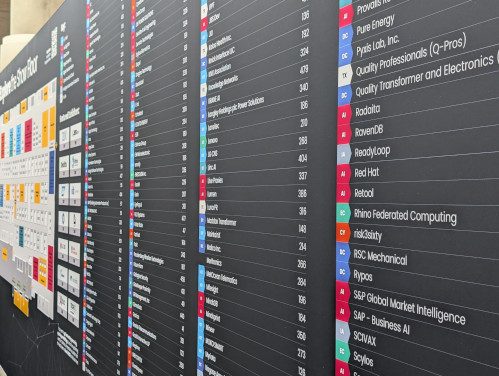

Technology conferences often focus on the newest innovations and flashiest demos. However, the conversations at TechEx North America revealed that enterprise decision-makers are increasingly concerned with the foundational elements required to make artificial intelligence work in the real world. The event brought together experts in edge computing, the Internet of Things, data center management, and cybersecurity to examine the practical infrastructure that must support AI before it can deliver business value.
Edge Computing: Where Data Meets Action
The Edge Computing track addressed latency, deployment discipline, and cybersecurity for hybrid industrial systems. Sessions positioned edge computing as a critical environment where companies can reassess the value of their data assets and examine how autonomous equipment makes decisions. Speakers from Akamai, Spectro Cloud, Scylos, TÜV Rheinland, the OPC Foundation, and Schneider Electric discussed scaling edge deployments across multi-site businesses, agentic network operations, distributed inference models, and immutable edge infrastructure.
Ed Doran of the Edge AI Foundation chaired the program, noting that the edge is a demanding operating environment. Moving intelligence closer to machinery changes risk profiles, though experts debated whether this shift increases or decreases overall exposure. Faster local decisions can reduce latency and dependence on central cloud services, but questions remain about how to maintain observability and control.
Industrial IoT and Digital Twins: Bridging the Demo to Deployment Gap
The IoT Tech Expo track on Industrial IoT and Digital Twins examined smart factory trends, AI applications beyond Industry 4.0, asset management, and practical roadmaps for avoiding what speakers called “pilot purgatory.” This term describes projects that work well in demonstrations but stall when integrated with older machines or legacy software systems. The gap between concept and real-world deployment received significant scrutiny across multiple sessions.
A joint session between Rockwell Automation and Ford focused on physical AI and connected asset intelligence. The discussion emphasized the challenge of scaling projects that appear viable in theory but fail when encountering actual factory floor conditions. Participants asked how intelligence can enter daily operations without becoming another dashboard that nobody owns.
Digital twins received similar critical appraisal. Several speakers argued that the most effective digital twin is not merely a visual replica for demonstrations. Instead, they called for operational models that can improve factory, city, or municipal facility performance. Siemens, Korea’s LG CNS, and Boston Dynamics contributed perspectives on designing smart systems that work in concord with the people and machines they are meant to benefit.
Data Center Congress: Power, Water, and Construction Constraints
The Data Centre Congress track addressed the largest challenges facing the sector: construction delays, power procurement, cooling requirements, water usage, and network infrastructure needed for AI data centers. Keynote speakers and roundtable participants discussed construction chaos and power availability. TechEx’s host city, Santa Clara, shared its own data center development journey as a case study.
AI depends on dense compute, which in turn depends on power, cooling, land, and permits. A recurring theme was the mismatch between rapidly changing AI economics and the years-long maturation timeline for infrastructure projects. Water and power constraints cut through the optimistic rhetoric surrounding AI scale, grounding discussions in practical limitations.
The Data Center Congress sessions made clear that the data center is where AI strategy becomes physical. Enterprise boardroom considerations now include power grids, water rights, and construction permits alongside technology choices.
Cybersecurity: Protecting the AI Pipeline
The Cyber Security and Cloud Expo track examined how zero-trust principles can be applied to control systems. Discussions covered the security implications of distributed inference models and the need for immutable infrastructure at the edge. As AI systems become more embedded in industrial and enterprise operations, the attack surface expands, requiring new approaches to authentication, monitoring, and incident response.
Looking Forward
TechEx North America highlighted that the path to AI productivity is not a stampede but a careful, infrastructure-dependent process. Unplanned implementations do not fit the modern enterprise environment. Companies must plan for power availability, water usage, deployment discipline, and security frameworks before AI can deliver on its promises. The next steps for the industry include standardizing edge deployment practices, developing digital twin operational models that drive real productivity, and aligning data center construction timelines with AI adoption roadmaps. These foundational elements will determine which organizations successfully move from AI experimentation to sustained operational value.