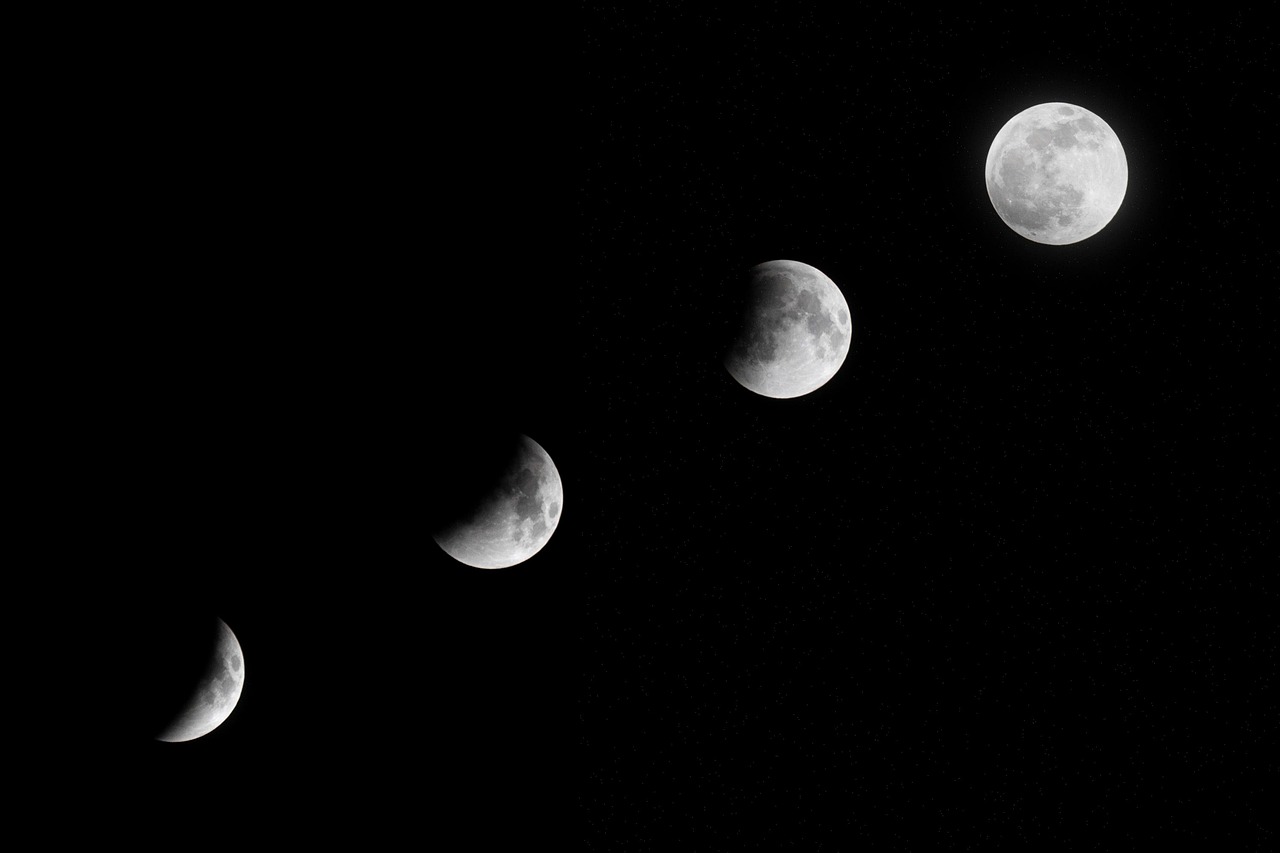

The appearance of the Moon undergoes constant change, cycling through distinct phases as the amount of its illuminated surface visible from Earth varies. These lunar phases are determined by the relative positions of the Sun, Earth, and Moon.
Observing the Waning Gibbous Moon
On January 7, the Moon exhibited a waning gibbous phase. This specific lunar phase occurs after the full moon and before the last quarter moon. During a waning gibbous, more than half of the Moon’s surface is illuminated, but the lit portion is decreasing each night.
The term “waning” signifies that the illuminated portion of the Moon is shrinking. “Gibbous” indicates that the shape is more than half illuminated, appearing convex.
# Understanding Lunar Phases
The complete cycle of lunar phases, known as a lunar month or synodic month, takes approximately 29.5 days. These phases are new moon, waxing crescent, first quarter, waxing gibbous, full moon, waning gibbous, third quarter (also known as last quarter), and waning crescent.
The new moon is when the Moon is between the Earth and the Sun, making it appear dark. As the Moon orbits Earth, the illuminated portion gradually increases, leading to the waxing crescent phase. The first quarter moon is when half of the Moon’s face is illuminated. Following this is the waxing gibbous, leading to the full moon when the entire face is lit.
After the full moon, the illuminated portion begins to decrease, entering the waning gibbous phase. The third quarter moon again shows half the face illuminated, but the opposite half compared to the first quarter. The cycle concludes with the waning crescent phase, eventually returning to the new moon.
# Optical Illusions and Lunar Perception
Observations of the Moon, including its phases, can sometimes be affected by optical illusions. These illusions can alter the perceived size or shape of the Moon. Atmospheric conditions and the Moon’s position relative to the horizon can play a role in these visual phenomena.
Spacecraft orbiting the Moon have captured images that demonstrate these effects, revealing how perspective and light can influence how we perceive celestial bodies.
Future Lunar Events
As the lunar cycle progresses, the Moon will continue its journey through its phases. Following the waning gibbous phase, observers can anticipate the arrival of the last quarter moon, and eventually, the new moon, marking the beginning of a new cycle. Astronomical resources provide accurate predictions of moon phases for planning observations.