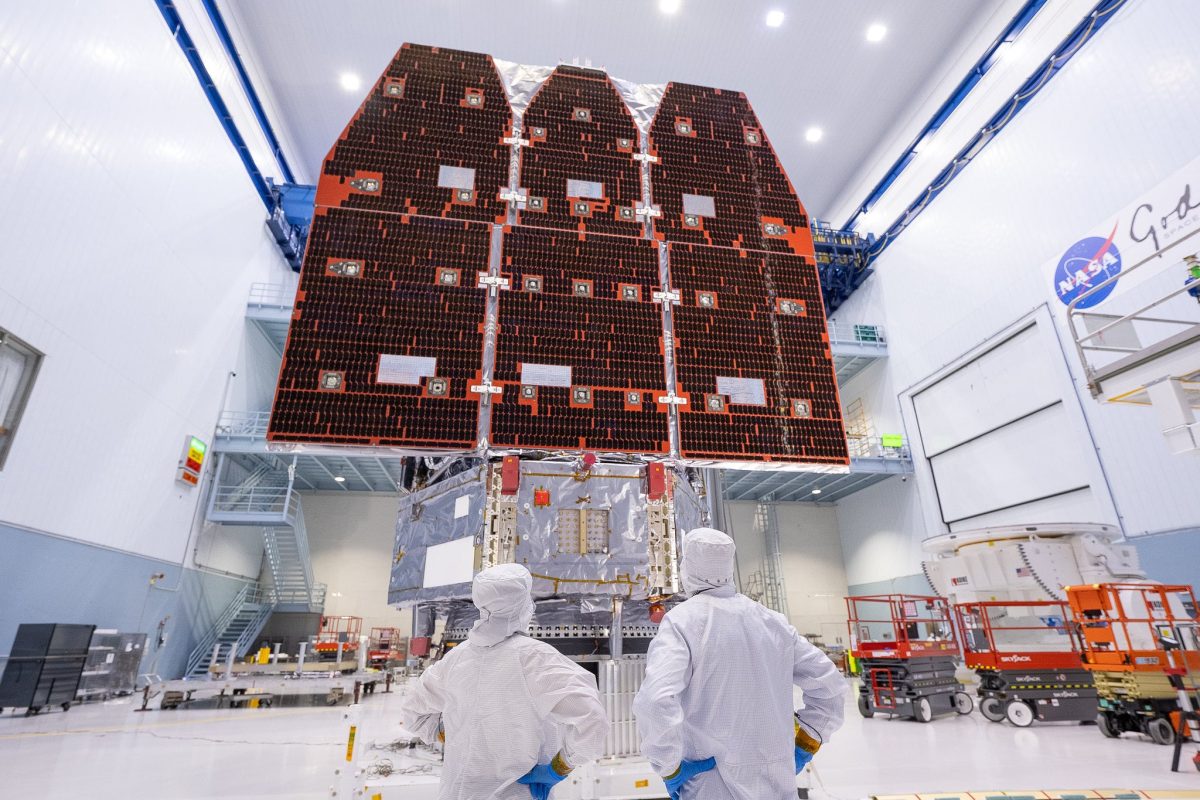

NASA has announced the completion of its next major space observatory, an instrument designed to create sharp, panoramic maps of the universe. The new telescope aims to reveal how the most mysterious invisible substances and distant worlds shape the cosmos.
The observatory is built to address fundamental questions about dark matter, dark energy, and the formation of galaxies. Its advanced imaging capabilities will allow scientists to produce an atlas of the universe with unprecedented detail.
This development comes approximately a quarter century after the Hubble Space Telescope reshaped modern astronomy. It also arrives a few years into the era of the James Webb Space Telescope, which has already provided deep infrared views of the early universe.
Technical Capabilities and Mission Goals
The new observatory employs a wide field of view to capture large sections of the sky in a single observation. This panoramic approach differs from the narrow, deep observations typical of earlier telescopes.
By mapping billions of galaxies and measuring their distances, the telescope will help astronomers create a three dimensional picture of the universe’s structure. The data will be used to study the distribution of dark matter and the effects of dark energy on cosmic expansion.
Significance for Exoplanet and Dark Matter Research
Beyond cosmology, the observatory is expected to contribute to the study of exoplanets. Its sensitivity will enable detection of faint planetary bodies and characterization of their atmospheres.
The telescope’s ability to observe in multiple wavelengths will also aid in tracking asteroids and other near Earth objects. This dual purpose enhances its value for both fundamental science and planetary defense.
Timeline and Launch Preparations
NASA has not yet announced an official launch date. Current timelines suggest a target within the next two to three years, pending final integration and testing phases.
The observatory will be launched from a site still to be determined. Once in orbit, it is expected to operate for at least five years, with potential for extended mission life.
Ground based observatories and space agencies worldwide are preparing to coordinate follow up studies using data from the new telescope. Collaboration agreements are already in place with several international partners.
The completion of this observatory marks a significant step forward in humanity’s ability to map and understand the universe at large scales. Scientists anticipate that the atlas it produces will serve as a foundational reference for decades of research.