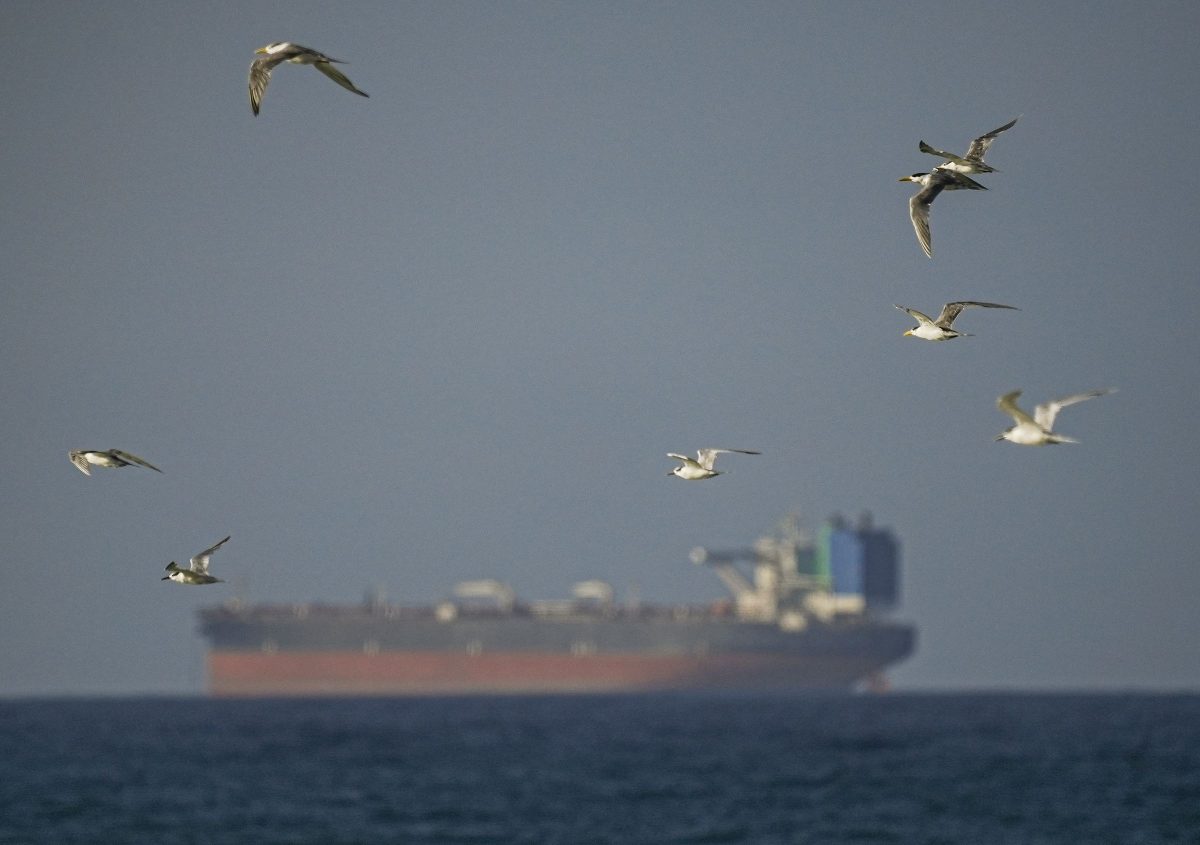

The Strait of Hormuz, a narrow maritime passage crucial for global oil shipments, is witnessing a significant increase in vessel spoofing. This practice involves ships manipulating their Automatic Identification System (AIS) transponders to broadcast false location or identity data. The trend is creating substantial uncertainty for marine insurers and oil traders who rely on accurate tracking for risk assessment and market analysis.
As the volume of vessels with suspicious or disappearing signals rises, specialized maritime intelligence analysts are employing increasingly creative methods. Their work involves parsing vast datasets from satellite AIS, radar, and other electronic intelligence to identify discrepancies. The goal is to pierce the veil of digital deception and ascertain the true movements of tankers in this geopolitically sensitive area.
The Mechanics of Maritime Spoofing
Spoofing a vessel’s AIS signal is a technically straightforward act with complex motivations. The AIS system, designed for collision avoidance and maritime safety, broadcasts a ship’s identity, position, course, and speed. By transmitting false AIS data, a vessel can create a digital ghost, appear in a location where it is not physically present, or entirely mask its journey.
Analysts cross-reference AIS pings with other sources, such as satellite imagery and radar data. When a ship’s reported position does not align with these independent verifications, it is flagged for investigation. Common red flags include impossible speeds, vessels appearing to travel over land, or identical AIS signatures appearing in two distant locations simultaneously.
Implications for Global Trade and Security
The strategic importance of the Strait of Hormuz cannot be overstated. Approximately one-fifth of the world’s oil passes through this chokepoint. Reliable tracking is foundational for global energy markets, insurance underwriting, and supply chain logistics. When data integrity breaks down, it introduces volatility and risk.
For insurers, obscured ship movements complicate the assessment of war risk premiums and the investigation of potential incidents. Traders face challenges in verifying oil shipments and delivery timelines, which can influence spot prices and contractual disputes. Furthermore, the practice raises significant security concerns for national authorities monitoring maritime traffic.
The Analyst Response
In response, a niche sector of maritime intelligence firms has evolved. These analysts do not merely monitor AIS feeds; they forensically reconstruct vessel journeys. Their techniques include analyzing the unique “fingerprint” of a ship’s radar emissions, examining satellite optical imagery for visual confirmation, and studying historical patterns of behavior for specific vessels or fleets.
This investigative process is often described as a high-stakes digital puzzle. By correlating disparate data points, analysts can often determine a ship’s true last known position, its likely destination, and even infer the rationale behind the spoofing, whether for sanctions evasion, illicit trading, or strategic obfuscation.
The demand for this clarified intelligence is driven primarily by commercial entities. Large energy companies, commodity trading houses, and P&I Clubs (marine mutual insurers) are principal clients seeking to de-risk their operations and investments in the region.
Looking ahead, the cat-and-mouse game between spoofers and trackers is expected to intensify. Analysts predict that spoofing technology will become more sophisticated, potentially leveraging artificial intelligence to generate more believable false trails. Concurrently, monitoring technology will also advance, with higher-resolution satellite imagery and more sensitive electronic surveillance becoming more accessible. The ongoing tension between maritime transparency and opacity in the Strait of Hormuz will likely remain a persistent feature of global shipping, requiring continuous adaptation from those tasked with monitoring this vital waterway.