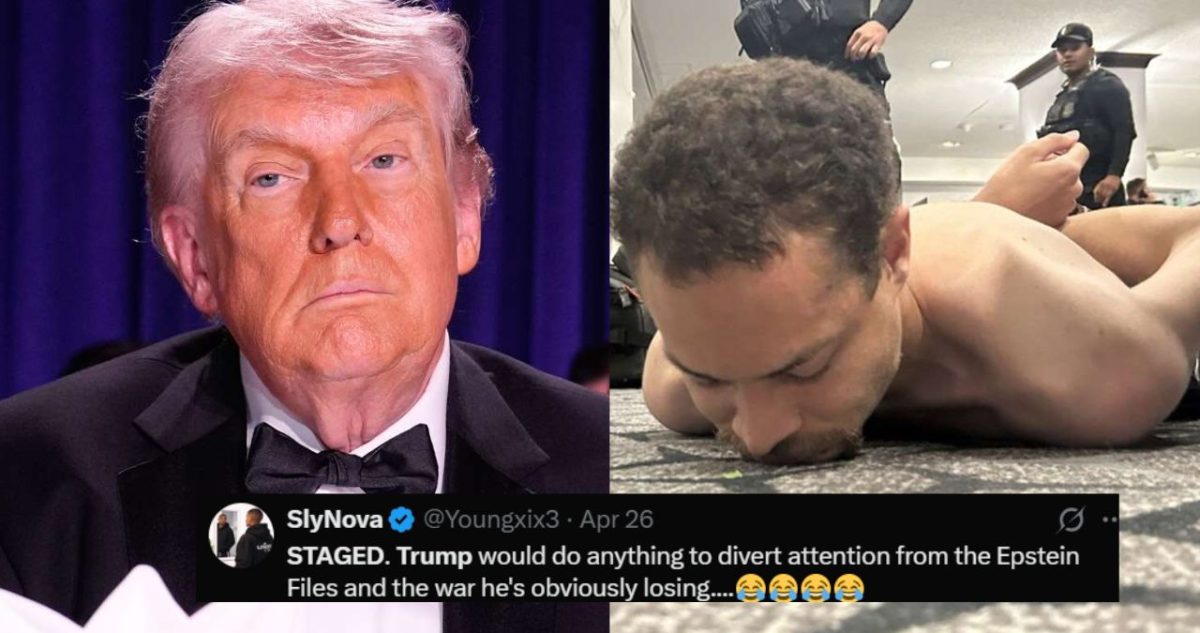

Social media platforms have become a proving ground for alternative interpretations of public events, and the recent security incident involving former President Donald Trump is no exception. Users are now scrutinizing released security footage from the White House Correspondents’ Dinner, with some alleging that the shooting may have been staged or fabricated.
The footage in question was captured by multiple cameras at the venue where the annual dinner took place. It shows a sequence of events that law enforcement has described as a genuine security breach. However, online communities have converged on what they perceive as inconsistencies in the timing, positioning, and reactions of security personnel.
Background of the Incident
The White House Correspondents’ Dinner is a long-standing tradition that brings together journalists, government officials, and public figures. Security is typically tight, and any disruption is treated with seriousness. The shooting occurred during a moment that remains under investigation by federal and local authorities.
Official statements have confirmed that an individual was detained and that no injuries were reported. Yet the scarcity of immediate, detailed explanations has left a vacuum that speculation has rushed to fill.
Key Points of Contention
Critics of the official narrative have highlighted several aspects of the footage. They note that some guards appear to react with a delay, that certain camera angles seem to obscure critical details, and that the audio track does not match the visual timeline. These observations have been amplified by prominent accounts on platforms such as X and Reddit.
Forensic video analysts who have commented publicly remain divided. Some argue that the anomalies are easily explained by typical camera lag, compression artifacts, and human error. Others concede that the footage warrants a more transparent release of unedited raw files from all available sources.
Reactions from Official Channels
The Secret Service and the Metropolitan Police Department have declined to comment on the online theories, citing an ongoing investigation. A spokesperson stated that the agency is committed to releasing a full report once all forensic analyses are complete. They also reminded the public that disinformation can hinder emergency response and public safety.
Journalistic organizations have urged caution. Several fact-checking outlets have published articles pointing to the lack of credible evidence for a hoax, while also acknowledging that the public has a right to ask questions when official information is delayed.
Implications for Digital Trust
The phenomenon reflects a broader trend of distrust in institutional narratives, especially when visual evidence appears to contradict official claims. For media organizations and technology platforms, it raises ongoing questions about how to verify and present security footage without fueling unfounded speculation.
Domain name registrars and web hosting services have historically played a role in this ecosystem by providing infrastructure for both official sources and independent analysts. Neutral, fact-based reporting remains the standard for responsible journalism in this space.
Authorities expect to release a comprehensive analysis within the next three to four weeks. That report is anticipated to include a frame-by-frame breakdown of the security footage, witness testimony, and a timeline of events. Until then, the official account stands, but public skepticism is unlikely to subside without clearer answers.