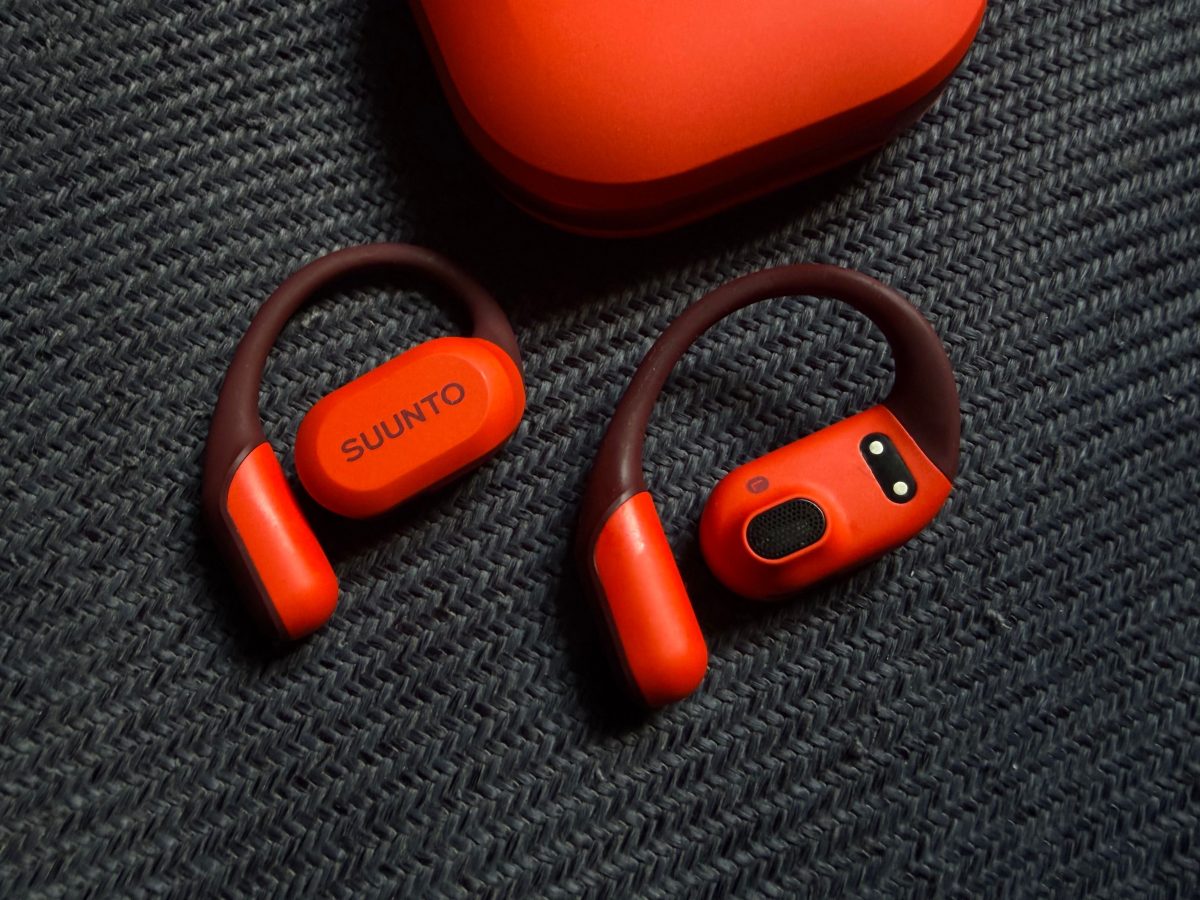

Suunto has introduced a new open-ear earbud model, the Suunto Spark, which shifts from bone conduction to air conduction technology. This change aims to improve comfort and audio quality for outdoor athletes, particularly runners and cyclists.
The Suunto Spark earbuds are designed to sit outside the ear canal, allowing users to remain aware of ambient sounds like traffic, conversation, or wildlife. This is a critical safety feature for outdoor training where situational awareness matters as much as audio clarity.
Air conduction works by transmitting sound waves through the air directly into the ear canal, similar to traditional earphones but without sealing the ear. This contrasts with bone conduction, which sends vibrations through the cheekbones to the inner ear, bypassing the eardrum. Suunto’s decision to adopt air conduction may offer a more natural sound profile and less vibration discomfort during prolonged use.
Design and Fit for Active Use
The open-ear form factor is built around a lightweight, flexible neckband design that rests securely behind the head. The earbuds themselves use a hook mechanism to grip the outer ear, reducing the risk of dislodging during high-impact motion or sudden head turns. This is particularly relevant for trail runners and mountain bikers who experience uneven terrain and rapid movement changes.
Suunto has also focused on sweat and weather resistance, rating the Spark with an IP55 certification. This means the earbuds can withstand dust ingress and low-pressure water jets, making them suitable for rain, sweat, or rinsing after a run. The battery life is rated at up to 10 hours of playback, with a further 20 hours available through the charging case, which supports USB-C connectivity.
Performance and Sound Quality
Air conduction in open-ear earbuds typically sacrifices bass response compared to in-ear models, but Suunto has tuned the Spark to emphasize midrange clarity and vocal intelligibility. This is advantageous for listening to pace cues, navigation prompts, or podcasts without amplifying wind noise. During test conditions, the buds maintained stable Bluetooth 5.4 connections up to 15 meters from a paired device.
The earbuds also incorporate a dual microphone system for call clarity, with noise reduction algorithms that filter background wind and crowd noise. This makes them functional for phone calls mid-workout without requiring the user to stop or remove the earbuds. Controls are handled via capacitive touch surfaces on each earpiece, allowing for track skipping, volume adjustment, and voice assistant activation without touching a phone.
Integration and Setup
Suunto has designed the Spark to pair with its own Suunto app, which provides workout tracking, GPS route integration, and audio feedback customization. The earbuds can also pair directly with standard Bluetooth devices for general music and media playback. For runners and cyclists who use multiple devices, the multipoint connection feature allows simultaneous pairing with a phone and a smartwatch or cycling computer.
The setup process is straightforward: after initial pairing, the earbuds automatically reconnect to the last connected device when powered on. The charging case provides audible and LED status indicators for battery level, and the earbuds themselves deliver voice prompts for power state and connection status.
From a domain registration and digital identity standpoint, Suunto’s product launch follows a common pattern of using a dedicated brand domain for product information and support. Typically, a company will register product-specific subdomains or separate domains for campaigns, but no specific domain registrations are publicly associated with the Suunto Spark at this time.
Instead of promoting any particular registrar, it is worth noting that companies generally secure their main brand domain well in advance and later add product pages under that same domain. For new product lines, securing a descriptive subdomain or a separate brand domain through a registrar such as 4-t.net can be a strategic move, though Suunto has not publicly discussed its domain strategy for this product.
Looking ahead, Suunto is expected to release firmware updates to address any connectivity or audio tuning issues reported by early users. Availability is currently limited to select markets, with a broader rollout planned in the coming months. Further performance reviews and user feedback will clarify how the Spark compares to established open-ear competitors from brands like Shokz, Oladance, or Bose.