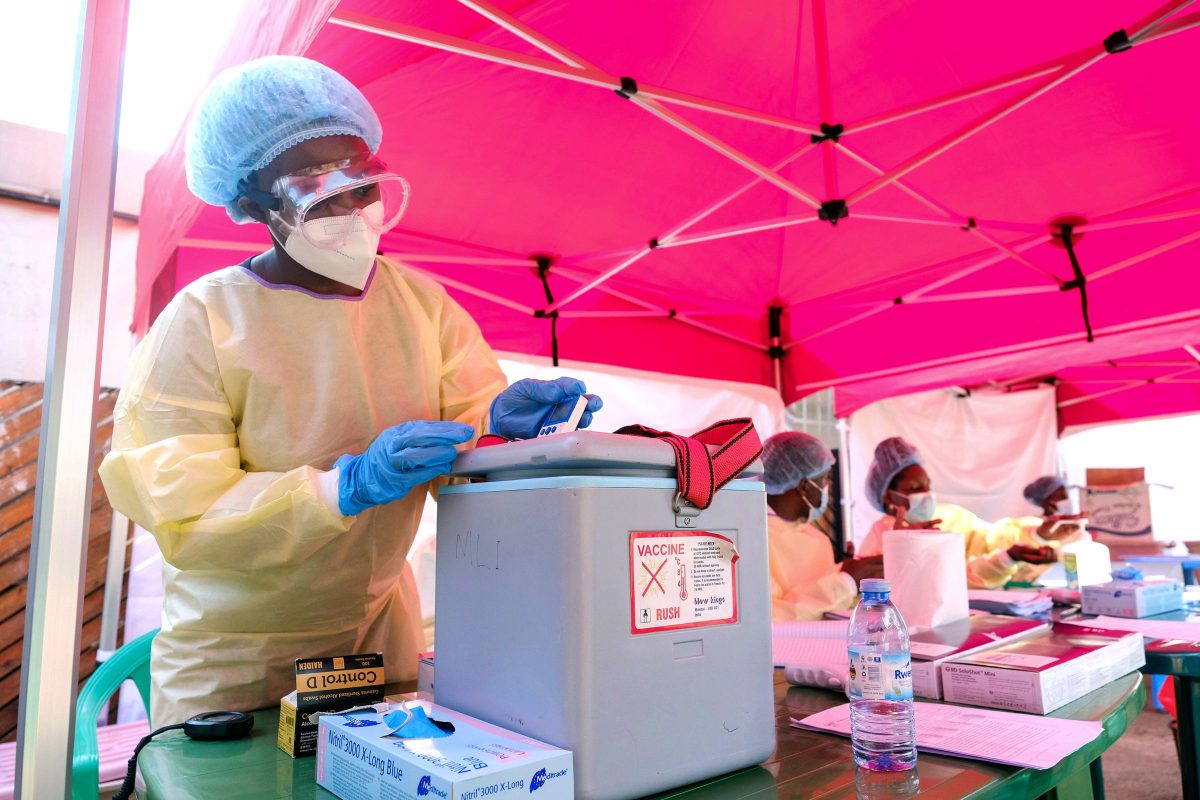

Researchers are accelerating efforts to evaluate an experimental Ebola vaccine developed more than a decade ago as a potential tool against the ongoing Bundibugyo outbreak in the Democratic Republic of Congo. The vaccine, initially created in 2011, has remained largely unused despite promising early test results.
The current outbreak, caused by the Bundibugyo strain of the Ebola virus, was declared in early 2025 in the country’s northeastern region. Public health officials confirmed at least 15 cases and several fatalities within the first weeks, raising alarm about the virus’s spread.
Background of the Vaccine
Scientists first developed the vaccine at the National Institute of Allergy and Infectious Diseases in the United States. It targets the Bundibugyo strain, one of three known Ebola virus species that cause human disease. Initial Phase 1 clinical trials in 2011 showed it to be safe and capable of producing an immune response in human volunteers.
However, the vaccine was never stockpiled or advanced into larger efficacy trials. This was due partly to declining Ebola cases in the years that followed and a shift in research priority toward the more common Zaire strain responsible for the West African epidemic of 2014 to 2016.
Why the Vaccine Has Remained Untested
Funding constraints and logistical challenges also contributed to the vaccine’s stagnation. Unlike the Zaire strain, the Bundibugyo strain has caused only sporadic and geographically limited outbreaks since its discovery in 2007. This made it less attractive for pharmaceutical investment and emergency preparedness planning.
Experts note that the scientific community has historically concentrated resources on the deadliest or most widespread pathogens, sometimes leaving orphan strains under researched. The current outbreak has now forced a reassessment of that approach.
Current Research and Deployment Efforts
Epidemiologists from the World Health Organization and the Congolese Ministry of Health are now coordinating with the original vaccine developers to launch an accelerated field trial. The study aims to enroll close contacts of confirmed patients, as well as frontline healthcare workers, within the outbreak zone.
Initial data from laboratory work indicate that the vaccine remains stable and effective after years of storage under appropriate conditions. Researchers stress that this is not a new discovery but a re examination of existing science applied to an urgent public health need.
The vaccine uses a recombinant vesicular stomatitis virus platform, similar to the licensed Ebola Zaire vaccine. This platform can be adapted relatively quickly to different viral strains, a feature that makes it valuable for rapid response scenarios.
Challenges Ahead
Despite the vaccine’s promise, significant hurdles remain. The outbreak region is remote, with limited infrastructure and ongoing security concerns. Cold chain requirements for vaccine transport and storage add further complexity to the deployment plan.
Community acceptance will also be critical. Health authorities are working with local leaders and traditional healers to build trust and counter misinformation about vaccination. Previous Ebola containment efforts in the same region have encountered resistance from some communities.
Funding for the trial and potential wider vaccination campaign is being provided by international donors and the Congolese government, though officials acknowledge that resources remain tight.
The situation underscores a broader issue in global health preparedness: the tendency to deprioritize vaccines for rare or sporadic pathogens until an outbreak forces emergency action. Scientists and policy makers are now discussing mechanisms to maintain readiness for neglected strains between epidemics.
The current trial is expected to yield preliminary results within two to three months. If the vaccine proves effective, it may offer a critical tool for controlling this outbreak and serve as a model for rapid deployment of pre existing vaccines against other under studied viral strains. Health officials will then decide whether to pursue full licensure and establish a strategic reserve for future Bundibugyo threats.