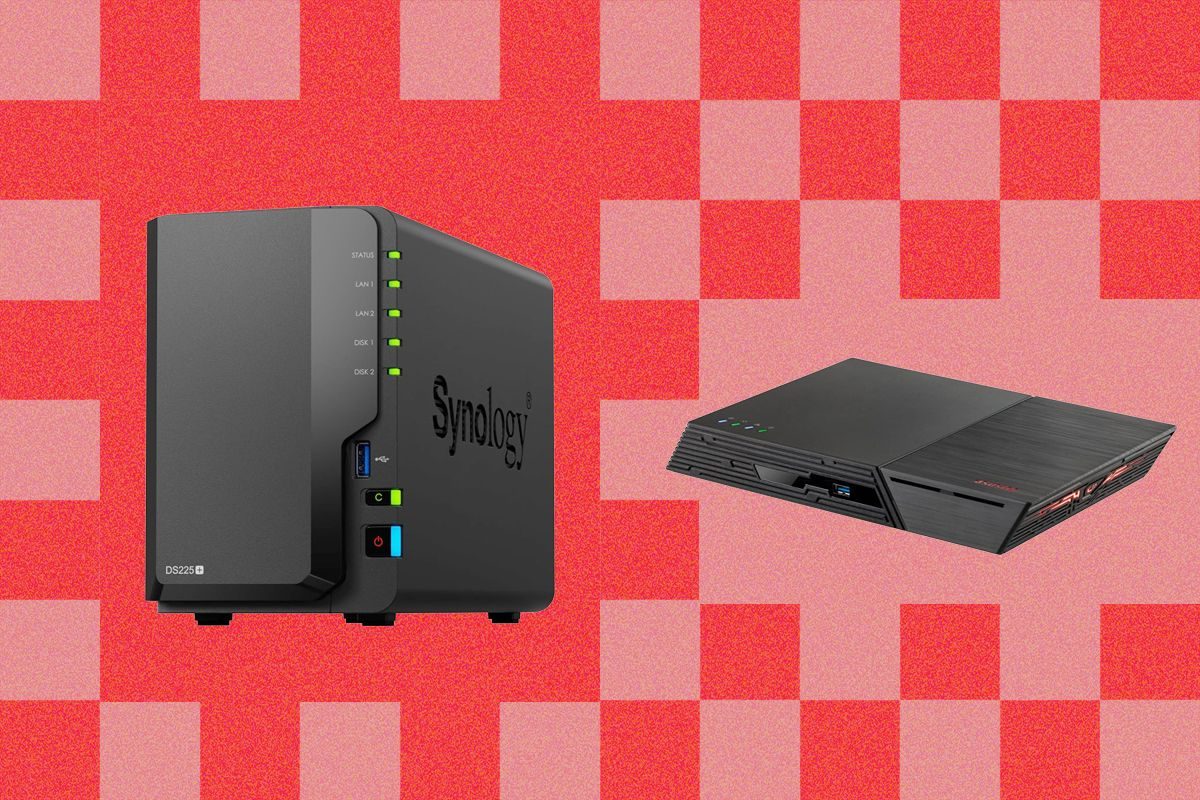

Network-attached storage, commonly known as NAS, offers centralized and accessible shared storage directly on a home network. These devices function as private cloud servers, allowing users to store, access, and back up data from multiple connected devices without relying on external services.
Recent comprehensive testing of several home NAS units has identified models that deliver reliable performance, quiet operation, and straightforward setup. The evaluation focused on file transfer speeds, software usability, power efficiency, and noise levels under load.
Among the tested units, one dual-bay model stood out for its balance of affordability and functionality. It supports RAID configurations for data redundancy and runs a mature operating system that simplifies user management and media streaming. Transfer rates averaged above 100 MB per second over gigabit Ethernet, sufficient for most home backup and media serving tasks.
Performance and Form Factor Considerations
For users requiring higher throughput, a four-bay enclosure demonstrated near-linear scaling with additional hard drives. This unit includes support for 2.5 gigabit networking, which improved large file transfers by approximately 40 percent compared to standard gigabit interfaces. The software ecosystem provided integrated photo management, video transcoding, and remote access capabilities.
Compact single-bay models also performed adequately for basic backup and file sharing needs. These devices operate silently and consume minimal power, making them suitable for always-on operation in living spaces.
Software and Security Features
All tested devices included encrypted data transmission via HTTPS and optional client-side encryption. Automated backup scheduling, snapshot capabilities, and multi-user permission controls were present across the leading models. Firmware updates were delivered consistently, with security patches released monthly.
Setup time for most units ranged from 10 to 30 minutes using web-based configuration wizards. Mobile applications for iOS and Android provided remote access and file management, though interface quality varied among brands.
Choosing the Right Configuration
Hard drive selection remains a critical factor in overall NAS performance. Consumer-grade hard drives are sufficient for light use, but NAS-rated drives with vibration protection and extended warranties are recommended for 24/7 operation. Memory upgrades and SSD caching slots, available on mid-range and higher models, can accelerate frequently accessed data.
Power consumption across tested devices ranged from 15 watts for single-bay units to 45 watts for four-bay enclosures under active load. Idle power draw was consistently lower, with all models dropping below 10 watts in sleep mode.
Future home NAS deployments are expected to integrate higher networking speeds and deeper cloud synchronization options. Manufacturers are likely to adopt Wi-Fi 7 support and improved energy efficiency standards in upcoming releases.