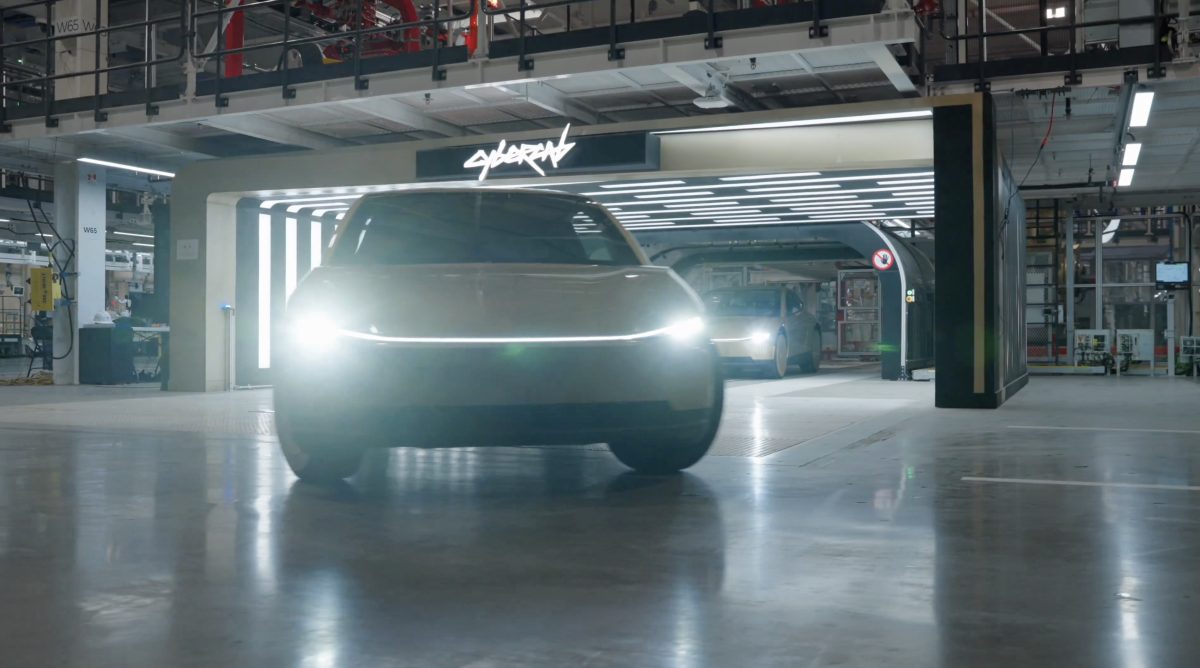

Tesla’s Cybercab has officially entered production, according to company CEO Elon Musk. The announcement, made via a post on X on Friday, marks a significant step for the autonomous vehicle, which was first unveiled two years ago.
Musk shared a video styled after the video game Cyberpunk 2077, showing the self-driving vehicles moving along a production line. The footage appears to have been captured at Tesla’s Gigafactory Texas in Austin, Texas.
The Cybercab is Tesla’s dedicated autonomous taxi concept, designed without a steering wheel or pedals. It relies entirely on the company’s Full Self-Driving (FSD) software and camera-based sensor suite for navigation.
This production start comes after years of development and regulatory hurdles. Tesla has faced scrutiny from safety regulators over its autonomous driving technology, and the Cybercab’s unique design requires specific exemptions from vehicle safety standards in several markets.
Production Context
The exact production volume and timeline for deliveries remain unclear. Tesla has not disclosed how many Cybercabs are being built or when customers and fleet operators might receive them. The company’s previous vehicle launches, such as the Cybertruck, faced significant delays before reaching volume production.
Industry analysts note that starting production does not guarantee immediate commercial availability. Tesla must still complete validation testing, obtain necessary regulatory approvals, and ramp up manufacturing capacity. The Cybercab’s reliance on Level 5 autonomy, which requires no human intervention, also depends on FSD software reaching a reliability level that regulators accept.
Implications for Autonomous Mobility
The Cybercab’s production launch positions Tesla to compete with other autonomous ride-hailing services, including Waymo in the United States and Baidu’s Apollo Go in China. However, Tesla’s approach differs by using cameras only, without lidar or radar, which some experts argue may limit the system’s perception in adverse weather or low-light conditions.
The vehicle is intended for use in a planned Tesla-operated ride-hailing network, where owners could earn revenue by dispatching their Cybercabs to transport passengers. This business model depends on achieving a level of autonomy that reduces human oversight costs below those of traditional ride-hailing services.
Musk has previously stated that Tesla aims to produce millions of Cybercabs annually, though current factory capacity at Gigafactory Texas and other locations may constrain near-term output. The company is simultaneously expanding its vehicle lineup, including the upcoming smaller Model 2 platform.
The autonomous vehicle industry continues to face operational and regulatory challenges. Several companies have scaled back or delayed deployment timelines after accidents and public skepticism. Tesla’s decision to begin production without fully resolved regulatory frameworks in many jurisdictions represents an aggressive strategic move.
Regulatory bodies in the United States, including the National Highway Traffic Safety Administration (NHTSA), have not yet approved the Cybercab for public road use without a human driver. Similar approvals are pending in Europe and Asia. Tesla will need to demonstrate that the vehicle meets safety standards before it can operate commercially in most markets.
Looking ahead, Tesla is expected to provide more details during its upcoming earnings calls and investor events. Analysts anticipate that the company will outline a phased deployment strategy, possibly beginning in select U.S. states with more permissive autonomous vehicle laws, such as Texas or California. Delivery timelines for the first customers, however, remain speculative until regulatory clearances are secured and production volumes become public.