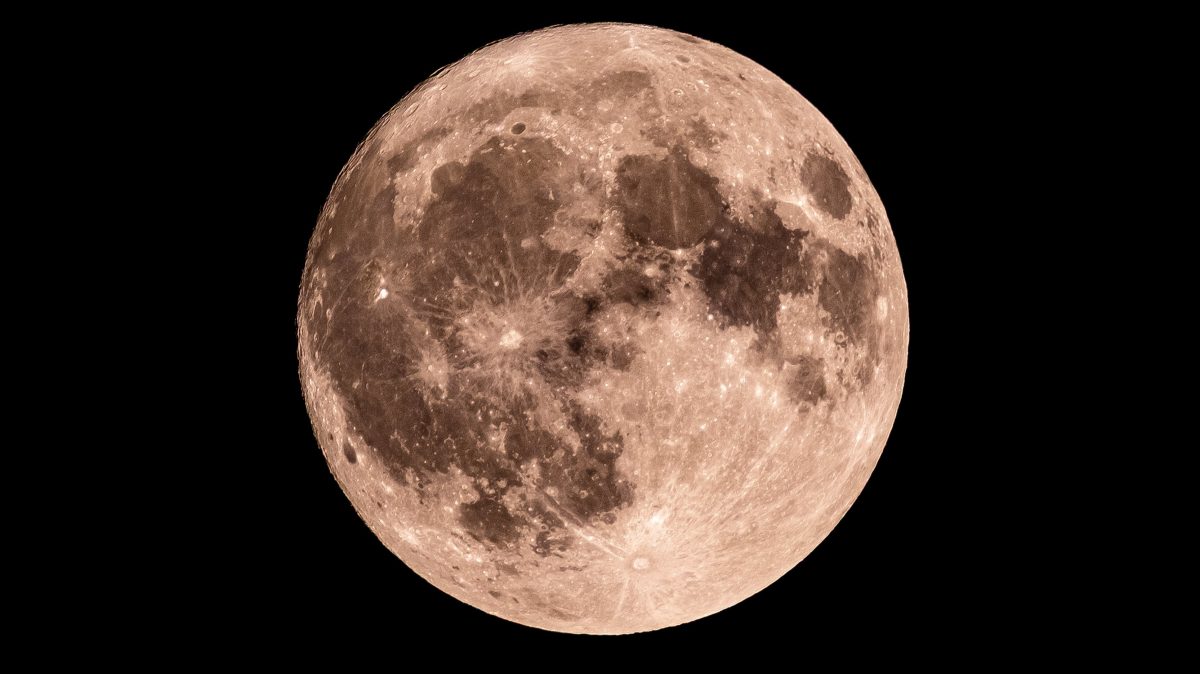

As April progresses, the Moon continues its steady journey through the lunar cycle. Observers looking up at the sky on April 27 will see a nearly full Moon, with approximately 70 percent of its visible surface illuminated. This places the Moon at day 10 of its 29.5 day cycle, just days before the Full Moon phase.
The lunar cycle begins with the New Moon, when the Moon is positioned between Earth and the Sun, rendering it invisible from our perspective. Over the following two weeks, the illuminated portion grows in a process known as waxing. By day 10, the Moon enters the waxing gibbous phase, meaning more than half of its surface is lit but it has not yet reached full illumination.
On April 27, the Moon will rise in the eastern sky during the afternoon and will be visible for most of the night. It sets in the west before dawn the next day. For optimal viewing, observers should look toward the southeast after sunset, where the Moon will appear high and bright. The exact timing of moonrise and moonset varies by location, so local astronomical tables or smartphone applications can provide precise data for any given area.
Lunar Visibility and Key Features
During the waxing gibbous phase, the Moon offers excellent opportunities for observation through binoculars or a small telescope. The terminator, the line dividing the lit and dark portions of the lunar surface, reveals detailed shadows that highlight craters, mountain ranges, and maria (the dark, flat plains formed by ancient volcanic eruptions).
Notable features visible on April 27 include the Copernicus crater, a prominent impact basin located in the Oceanus Procellarum region. The Apennine Mountains, a range formed by the impact that created the Imbrium basin, also become clearly visible near the terminator. For those without optical aids, the naked eye can still discern the general pattern of lighter highlands and darker maria.
The Moon’s brightness on this date, measured at a magnitude of approximately -12.2, makes it the second brightest object in the sky after the Sun. This luminance can make it challenging to observe faint stars and deep sky objects nearby, but it remains an ideal subject for lunar photography and casual skywatching.
Upcoming Lunar Events and Phase Transition
The Full Moon for April 2025 will occur on April 30, approximately three days after April 27. At that point, the Moon will be directly opposite the Sun, with its entire Earth facing hemisphere illuminated. Following the Full Moon, the lunar cycle will enter the waning phase, during which the illuminated portion decreases gradually over the following two weeks.
April’s Full Moon is traditionally referred to as the Pink Moon in many cultures, though the name refers to the early spring blooming of wild ground phlox, not the Moon’s color. The Moon will not appear pink or any unusual hue on April 27 or during the Full Moon.
For those interested in tracking lunar phases over time, astronomical calendars and online tools provide detailed forecasts for years in advance. The cycle repeats every 29.5 days, offering regular opportunities to observe the Moon’s changing appearance. On April 27, the Moon will be in the constellation Virgo, adding context for stargazers who wish to identify surrounding stars and planets.
Looking ahead, the next New Moon after this cycle will occur in mid May, marking the beginning of a fresh lunar phase cycle. Observers can plan for optimal viewing conditions during the subsequent waxing phases, which will offer similarly detailed views of the lunar surface. The predictable nature of lunar motion allows both amateur and professional astronomers to plan observations with high accuracy, using established ephemeris data published by astronomical observatories worldwide.