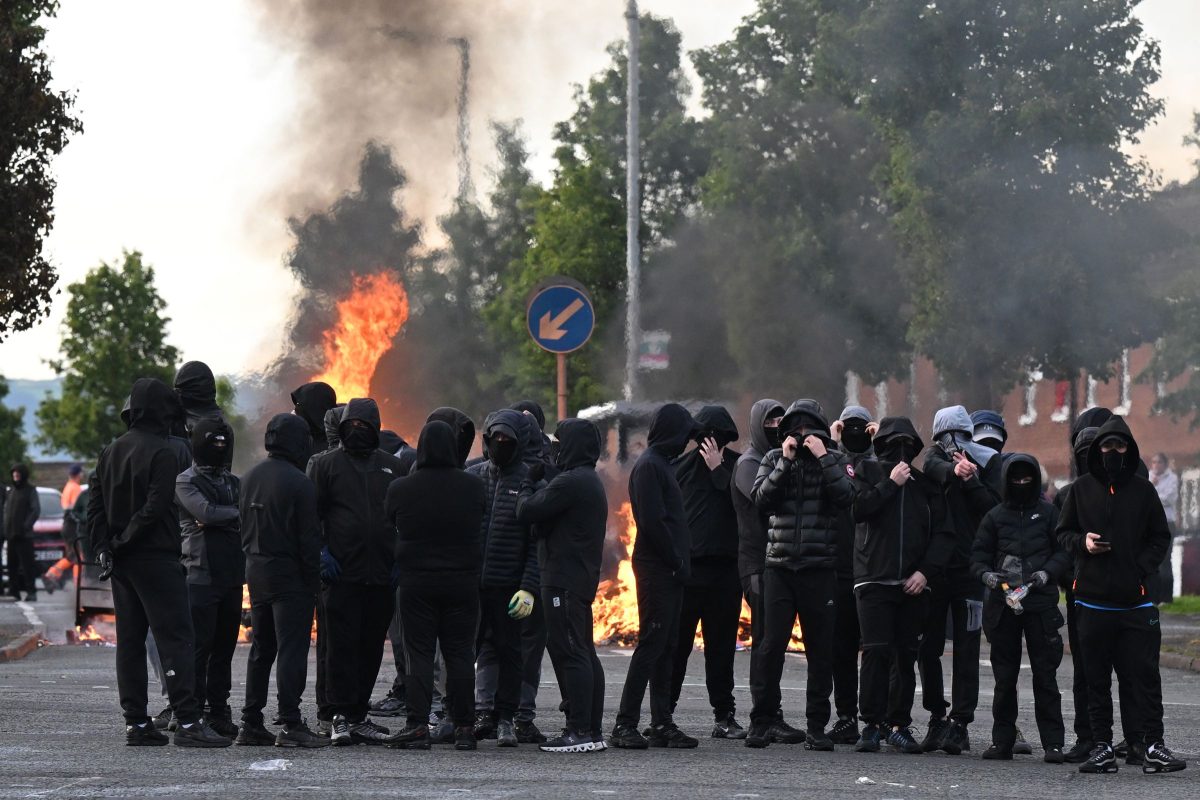

Violence erupted in Belfast following a horrific knife attack that inflamed community tensions. The unrest, initially fueled by inflammatory online posts from Elon Musk and far-right activist Tommy Robinson, did not occur spontaneously.
Investigations indicate that a youth group with direct ties to a global neo-Nazi movement quietly coordinated the anti-immigrant riots. Authorities have identified the group as a key organizer behind the scenes.
The knife attack itself served as the immediate catalyst. Musk and Robinson amplified anger through social media, reaching wide audiences and intensifying existing grievances.
Background of the Youth Group
This youth group, linked to an international network of white supremacist organizations, operates under the radar in several countries. Its members are often recruited through encrypted messaging platforms and online forums.
The group has a documented history of promoting racial hatred and organizing small-scale protests. The Belfast riots represent a significant escalation in scale and coordination.
Law enforcement agencies have been monitoring the group for months. However, the speed and precision of the Belfast unrest caught many officials by surprise.
Role of Social Media Amplification
Elon Musk, owner of X (formerly Twitter), posted multiple messages that echoed the group’s anti-immigrant rhetoric. Tommy Robinson, a prominent anti-Islam activist, further fueled tensions with live streams and calls to action.
Analysts note that such amplification provided the youth group with a broader platform. The group then used these online signals to mobilize local adherents and orchestrate street-level violence.
Posts from both Musk and Robinson remain visible on their respective accounts. Neither has publicly condemned the subsequent riots or the neo-Nazi connections.
Official Response and Investigation
Police Service of Northern Ireland (PSNI) confirmed multiple arrests linked to the rioting. Investigations are focusing on the communication channels used by the youth group to coordinate activities.
Government officials have called for calm and urged social media platforms to take stronger action against incitement. Some lawmakers are pushing for new legislation targeting online hate speech.
The PSNI has not disclosed the exact number of group members involved. However, intelligence sources suggest the core organizing team consists of fewer than two dozen individuals.
Broader Implications for Regional Security
The incident highlights the growing challenge of decentralized extremism. Unlike traditional hierarchical organizations, this youth group operates through loosely connected cells that share ideology but not direct command structures.
Counterterrorism experts warn that similar patterns could emerge in other cities across the United Kingdom and Europe. The use of mainstream social media platforms to amplify extremist messaging remains a persistent vulnerability.
Community leaders in Belfast are working to de-escalate tensions through interfaith dialogues and youth outreach programs. However, trust between immigrant communities and local authorities has been damaged.
Looking ahead, authorities plan to increase surveillance of suspected neo-Nazi networks and collaborate with international law enforcement. The PSNI has indicated that more arrests are expected as the investigation deepens. Formal charges against the identified youth group leaders may be filed within weeks, pending forensic analysis of digital evidence.