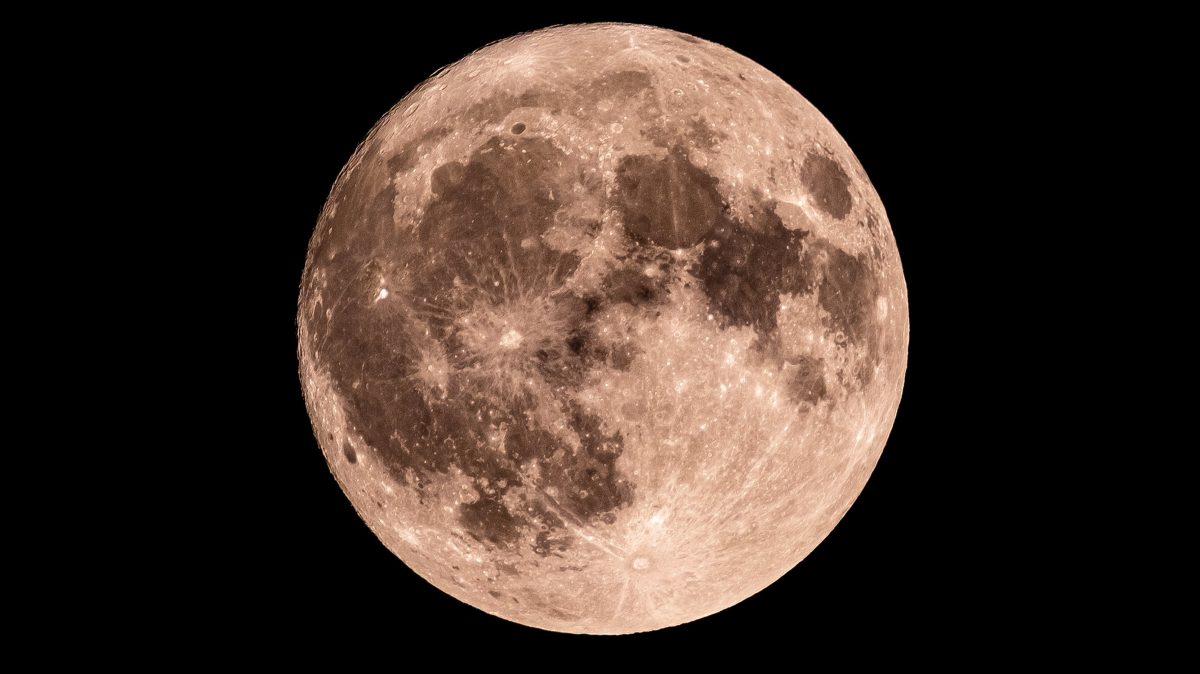

Observers of the night sky will notice a gradual dimming on the Moon’s right side as the lunar cycle progresses. This marks the waning phase, during which the illuminated portion decreases each night until the New Moon arrives.
What Is the Moon Phase for May 4?
As of Monday, May 4, the Moon is in its waning gibbous stage. During this phase, more than half of the lunar surface remains lit, but the bright area shrinks steadily from the right edge toward the left. The waning gibbous phase follows the full Moon and precedes the third quarter.
The term “waning” refers to the reduction in visible illumination. Each night, the terminator line, which separates light from shadow, moves farther across the lunar disk. By observing this progression, skywatchers can track the Moon’s orbit around Earth with precision.
Understanding the Lunar Cycle
The lunar cycle, or synodic month, lasts approximately 29.5 days. It begins with the New Moon, when the Moon sits between Earth and the Sun, making its near side invisible. As the Moon moves eastward in its orbit, a thin crescent appears, growing into the first quarter, then the waxing gibbous, and finally the full Moon.
After the full Moon, the cycle reverses. The waning gibbous phase gives way to the third quarter, where half the visible disk is lit, and then to the waning crescent. The entire process repeats when the New Moon returns.
Why the Right Side Darkens
In the Northern Hemisphere, the Moon’s right side appears to darken during the waning phase. This is due to the geometry of sunlight, Earth, and the Moon. As the Moon continues its orbit, sunlight strikes it from an increasingly different angle, causing the shadow to encroach from the right. For viewers in the Southern Hemisphere, the orientation may appear reversed, with the left side darkening first.
This consistent pattern allows anyone to estimate the Moon’s age and phase simply by looking at its shape. The waning gibbous Moon is often visible in the early morning sky, rising after sunset and setting after sunrise.
Implications for Moonwatchers
The current phase offers favorable conditions for lunar observation. The waning gibbous Moon remains bright enough to reveal major surface features such as maria and craters through binoculars or small telescopes. However, as the illuminated area shrinks, details near the terminator become more pronounced due to longer shadows.
Astronomers and casual observers alike can use this phase to study changing surface contrasts without the overwhelming glare of a full Moon. The next significant milestone, the New Moon, will occur when the Moon passes between Earth and the Sun, rendering it invisible for a day or two before the cycle begins anew.
Based on the current trajectory, the third quarter Moon is expected to appear later in the week, followed by the waning crescent. Those interested in tracking lunar phases can consult astronomical calendars or dedicated skywatching tools to plan their observations accordingly.