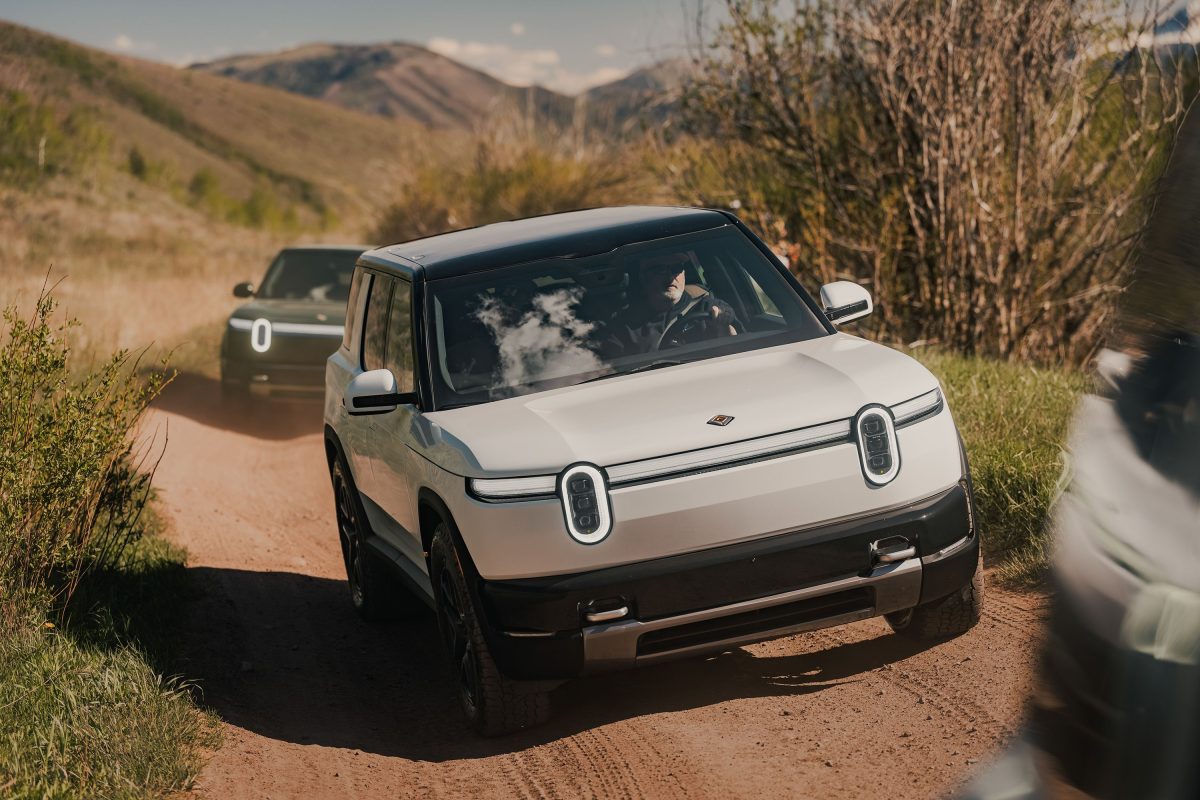

RJ Scaringe, the chief executive officer of Rivian Automotive, recently sat down for an extensive interview covering the company’s position in the rapidly evolving electric vehicle market. The conversation touched on Tesla’s Cybertruck, Ferrari’s new EV model named Luce, and the critical importance of Rivian’s upcoming R2 SUV.
Background: Rivian’s Current Position
Rivian has established itself as a significant player in the electric truck and SUV segment. The company’s R1T pickup and R1S SUV have drawn attention for their off-road capabilities and innovative design. However, the broader EV industry is becoming increasingly crowded, with legacy automakers and startups alike vying for market share.
Scaringe acknowledged that the competitive landscape is intensifying. He noted that Tesla’s Cybertruck, despite its unconventional design and production delays, represents a direct competitor in the pickup segment. He described the Cybertruck as a “statement vehicle” that pushes boundaries, but emphasized that Rivian’s approach focuses on different customer priorities, such as utility, durability, and driving experience.
Reactions to Tesla’s Cybertruck
When asked about the Cybertruck, Scaringe said that Tesla’s entry validates the market for electric pickups. He pointed out that Rivian’s vehicles are designed for a more traditional truck buyer, with features like a gear tunnel, a camp kitchen, and a robust suspension system. He did not dismiss the Cybertruck as a threat, but framed it as part of a broader shift toward electrification that benefits all players.
Scaringe also commented on Tesla’s manufacturing challenges, noting that scaling production is one of the hardest tasks in the automotive industry. He expressed respect for Tesla’s innovation while underscoring Rivian’s own manufacturing improvements at its plant in Normal, Illinois.
Ferrari’s Luce and the Luxury EV Market
The conversation shifted to Ferrari’s upcoming electric model, code-named Luce. Scaringe called Ferrari’s move into electrification a “significant milestone” for the luxury segment. He suggested that Ferrari’s entry could help dispel lingering doubts about EV performance among traditional car enthusiasts.
Scaringe argued that high-end electric vehicles must deliver on both speed and emotional appeal. He noted that Rivian’s vehicles are not luxury-focused in the same way, but the company aims to offer a premium experience through design, sustainability, and customer service. He did not see Ferrari as a direct competitor, but as a signal that electrification is becoming unavoidable even for the most exclusive brands.
The Stakes for the R2 Model
The most critical topic was the R2, Rivian’s planned midsize SUV, which is expected to launch at a lower price point than the R1S. Scaringe did not mince words about the R2’s importance. He stated that the success of this model is essential for Rivian’s long-term viability and its ability to achieve profitability.
He explained that the R2 is designed to appeal to a broader consumer base, with a target price around $45,000 to $50,000. This price range places it in direct competition with models like the Tesla Model Y and Ford’s upcoming electric Explorer. Scaringe acknowledged that if the R2 fails to gain traction, Rivian would face significant financial and strategic difficulties.
He elaborated that the R2 will be built on a new, more cost-effective platform, which should allow for higher production volumes and better margins. Rivian has also invested heavily in software and battery technology to keep the R2 competitive. Scaringe emphasized that the company’s survival depends on executing the R2 launch flawlessly.
Implications for the EV Industry
Scaringe’s remarks underscore a broader truth about the EV market: volume and affordability are becoming as important as innovation. Rivian, like many startups, faces the challenge of transitioning from a niche, high-end brand to a mass-market player. The R2 represents that transition.
He also noted that government incentives and charging infrastructure remain critical factors. Without consistent policy support and a robust charging network, even well-designed EVs may struggle to achieve widespread adoption. Scaringe called for industry-wide collaboration on charging standards and grid capacity.
Looking Ahead
Rivian has announced that the R2 is expected to begin production in 2026. The company plans to reveal more details about the vehicle’s specifications and pricing later this year. Scaringe indicated that Rivian is also exploring partnerships and potential licensing deals for its technology, though no formal agreements have been disclosed. The coming months will be pivotal for Rivian as it prepares to deliver its most commercially critical vehicle to date.