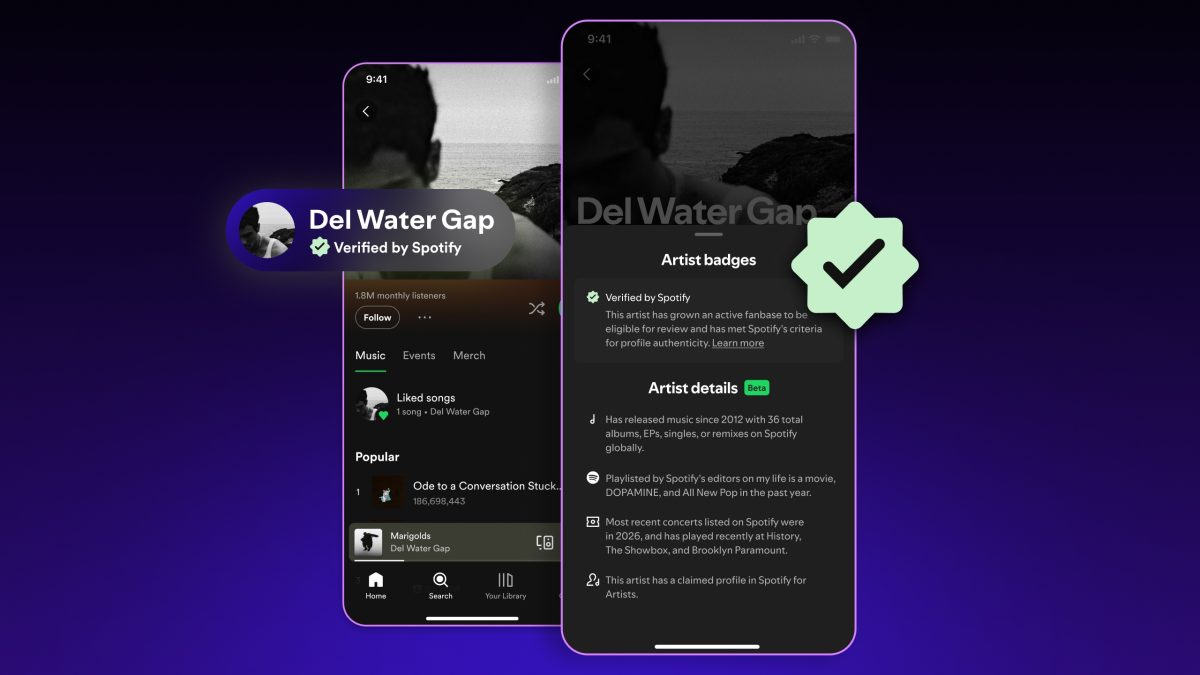

Spotify is moving to address a growing challenge in music streaming: distinguishing human artistry from content generated entirely by artificial intelligence. On April 30, the platform announced a new verification system designed to help listeners identify profiles that represent real human musicians.
The feature, branded as an official “Verified by Spotify” badge, will appear as a small green mark on artist profiles, albums, and tracks. The badge is intended to signal that a given profile belongs to a human artist rather than a synthetic or AI-only entity.
Background and Rationale
The streaming industry has seen a sharp increase in AI-generated music uploaded by third parties. Some of these tracks mimic established artists, sometimes without authorization, while others are created purely by algorithms. This has raised concerns among record labels, musicians, and fans about authenticity, copyright, and fair compensation.
Spotify’s announcement follows similar moves by other digital platforms that are grappling with the rise of generative AI. The company states that the badge will be awarded only after a manual review process, ensuring that verified profiles correspond to real human artists with a demonstrated track record of creating original music.
Technical and Operational Details
According to Spotify’s public statements, the verification process will not be automatic. Applicants must submit documentation proving their identity and connection to the music they release. The company also plans to remove content from profiles that are found to be purely synthetic or that impersonate human artists.
The badge will be visible across the desktop and mobile versions of the platform. It will appear next to the artist name on search results, playlist entries, and the main artist page. Spotify has not disclosed whether the badge will carry a cost for artists or labels, but early indications suggest it will be free of charge for eligible musicians.
Industry and Artist Reactions
Early reactions from the music industry have been mixed. Independent artists and industry advocacy groups have largely welcomed the move as a step toward transparency. However, some critics argue that the verification system may not be sufficient to address the broader problem of AI-generated content flooding streaming services.
Questions remain about how Spotify will handle borderline cases, such as music that is co-created by humans and AI tools, or profiles that mix original human recordings with AI-assisted elements. The company has not yet published detailed criteria for these scenarios.
Broader Implications for Digital Identity
This development also touches on wider issues of digital identity and content provenance. As AI becomes more capable of producing convincing audio, the need for reliable verification methods extends beyond music to podcasts, audiobooks, and other audio content. Spotify’s move may set a precedent for how other streaming and content platforms address similar challenges.
For domain name registrars and online brand managers, the trend highlights the growing importance of verified digital identities. Just as Spotify is attempting to confirm the human origin of music, many businesses and individuals are seeking ways to authenticate their online presence through verified domains and secure digital credentials.
The technology behind verification badges, whether on music platforms or websites, relies on similar principles of identity proofing and reputation scoring. These systems can help reduce fraud and impersonation, but they also require careful implementation to avoid excluding legitimate users or creating barriers to entry.
Outlook and Next Steps
Spotify has stated that the verified badge will begin rolling out to eligible artists in the coming weeks. The company expects to complete the initial rollout by the end of the second quarter. It has also indicated that the verification process will be refined over time based on feedback from artists and listeners.
Industry observers anticipate that other major streaming platforms will follow with similar measures. As generative AI continues to evolve, the line between human and machine creation will likely require ongoing adjustments to verification standards and enforcement policies.
For now, Spotify’s green badge offers a practical, if partial, solution for listeners who want to know whether the music they hear is made by a person or a program.