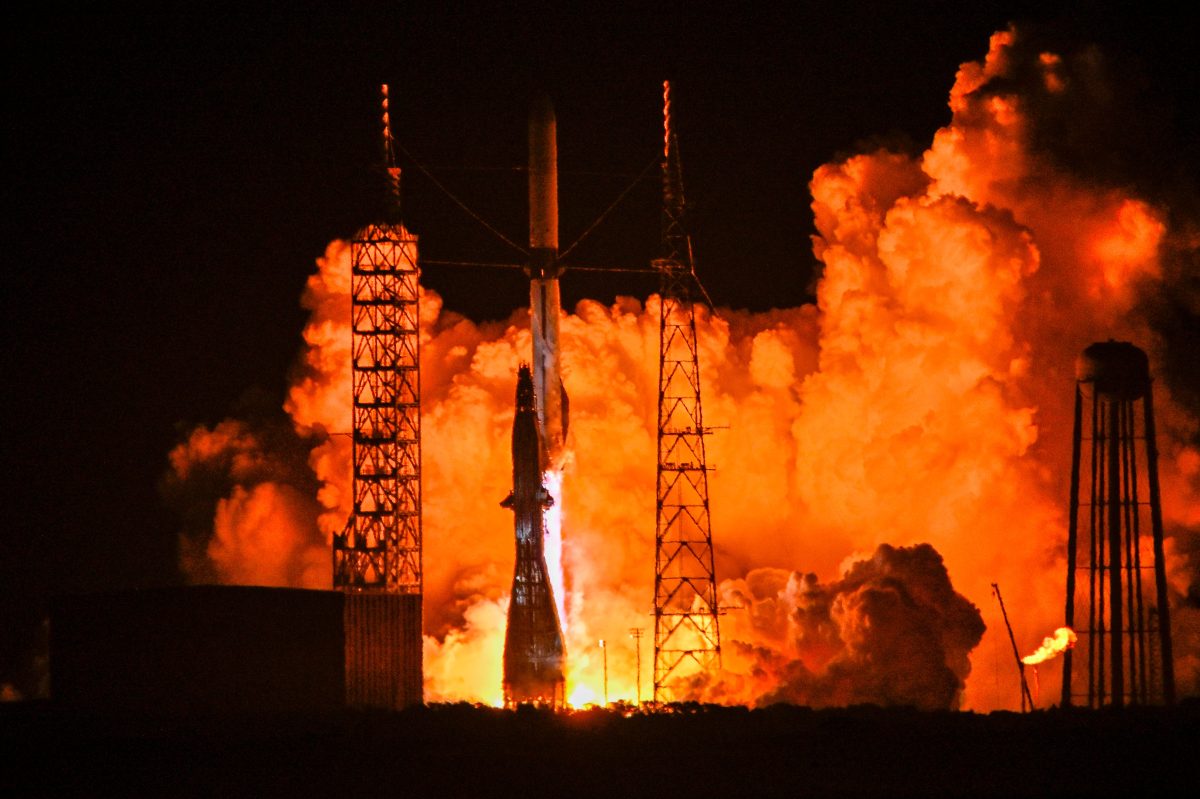

A significant setback occurred on the evening of September 12, 2025, at Cape Canaveral Space Force Station in Florida, when Blue Origin’s New Glenn rocket suffered a catastrophic explosion during a static fire test. The incident produced a large fireball visible for miles and sent debris across the launch complex, raising immediate questions about the vehicle’s readiness and the company’s long-term orbital ambitions.
Details of the Incident
The explosion took place during a preflight fueling and engine test sequence. Witnesses reported a loud blast followed by a sustained fire that consumed the upper stage and severely damaged the first stage. No injuries were reported, and the area was cleared according to standard safety protocols.
Blue Origin has not yet released an official cause. However, preliminary assessments suggest a possible failure in the methane or liquid oxygen feed system, or an unexpected combustion event within the engine bay. The company confirmed that the test was part of standard prelaunch validation procedures for the New Glenn rocket, which is designed to compete in the heavy lift and commercial satellite launch market.
Implications for Blue Origin
The loss of the test vehicle represents a major financial and programmatic blow. New Glenn is central to Blue Origin’s strategy to offer commercial launch services, support NASA missions, and eventually deliver payloads to the Moon and beyond. The rocket is intended to be partially reusable, similar to SpaceX’s Falcon 9, with a reusable first stage designed to land on a drone ship.
Analysts estimate that the destroyed vehicle could delay the company’s first orbital launch by at least six to twelve months. This setback may also affect Blue Origin’s existing contracts, including those with satellite operators and government agencies such as the U.S. Space Force. The company’s lunar lander program, reliant on the New Glenn’s heavy lift capacity, could also face cascading delays.
Industry and Regulatory Context
The explosion occurred at a time of increased competition in the orbital launch market. Companies like SpaceX, United Launch Alliance, and Rocket Lab have established reliability records. Blue Origin’s failure highlights the technical challenges inherent in developing new heavy lift vehicles, particularly those using complex methane engines never flown before on such a scale.
The Federal Aviation Administration’s Office of Commercial Space Transportation has opened a mishap investigation. Such investigations typically require the company to identify root causes, implement corrective actions, and receive FAA approval before resuming launches. The investigation timeline remains uncertain, but past incidents at other companies have taken several months to resolve.
Next Steps and Outlook
Blue Origin is expected to provide a formal update within the coming weeks. The company has already assembled a second New Glenn first stage at its manufacturing facility in Florida. However, the upper stage destroyed in the explosion must be rebuilt, as it was a unique test article with specific instrumentation and flight control systems.
The incident may prompt calls for increased transparency in the commercial space sector, as well as debates about safety standards at launch complexes shared by multiple operators. For now, focus remains on completing the investigation and determining the viability of the company’s revised launch schedule. Industry observers will watch closely for any official updates from Blue Origin or regulatory bodies in the months ahead.